Are Yak Bones Safe for Dogs?
Yak chews are not bones at all — they are hard dried cheese that will not splinter and is digestible — but they are not risk-free: most veterinary dentists warn that their hardness can fracture a dog’s teeth, so they are only a reasonable choice for a strong adult dog with healthy teeth, given in the right size, under supervision, with the end piece removed before it can be swallowed.
What you are actually buying is a Himalayan cheese called Churpi, made by a traditional recipe from yak milk and lime juice. The juice sets the milk, the curd is lifted from the coagulated milk once the whey has drained away, and the curd is pressed into pressed blocks that harden through slow drying until the result is a firm bone-shaped chew.
Labels disagree about what else is inside. Some recipes use only yak milk; others blend yak and cow milk. Some list salt; others claim no cow milk and no preservatives. Flavored versions add a fruit concentrate or a vegetable concentrate. The finished piece is often pale yellow and semi-translucent, with a faint smoky scent from the drying fires — and that smell, in my experience, is the first thing a dog notices before it ever takes a bite.
What Are Yak Bones, Exactly?
Yak bones are not bones at all they are hard cheese chews made from yak milk, pressed and dried in the Himalayas until they are hard enough to last for days of gnawing.
The story starts with food, not pet treats. For generations, herders in the high mountains kept portable protein for themselves and their working dogs: milk pressed into dense blocks that could travel for weeks without spoiling. That food was Churpi, and the modern chew is its direct descendant.
The making follows the same old sequence: milk collection first, then curd formation, then pressing, smoking and sun drying — the blocks cure under high-altitude sun, sometimes over yak dung fires, until they are sun-dried for months and hard as horn. The trade is newer than the food: the dog chew trade only began after 2003, with producers clustered in Ilam district in eastern Nepal and Kathmandu exporters sending the chews abroad. What arrives in a pet store bag is therefore an old herder food with a very new job.
How Are Yak Chews Made?
Yak chews are made by setting milk with lime juice, pressing the curd into blocks, and drying them slowly until they are hard — and that slow drying is exactly what decides how safe the finished chew is.
A well-dried chew wears away a little at a time. That gradual wear is the whole point: the surface gives way in small shavings of digestible cheese instead of breaking into shards, and the chew never turns into the slimy mass that makes the rawhide comparison so unflattering for rawhide. On splintering and digestion, the chew genuinely holds up.
But hardness is a bargain with two sides, and the making sets the terms. The chew is safe for most dogs only when two safety conditions hold: the right size and someone willing to supervise the end. A chew that is too small invites a choking risk and swallowing whole; a dog left alone with a worn nub can crack a tooth in a single bite, with no warning — and that is the point most veterinary sources stress in their vet advice. The chew is built for gentle gnawing; aggressive biting is where it fails. Watch for splintering signs — cracking, sharp edges, a sudden change in how the chew feels — and remove the chew the moment they appear.
Are Yak Bones Safe for Dogs? What Vets and Sellers Say
Yak chews are safe for most healthy adult dogs on the measures sellers talk about — and that is where the agreement ends, because vets and sellers are answering different questions.
Sellers compare yak chews with real bones, and on that comparison the chew wins easily. Whether raw bones, cooked bones or smoked bones, all are brittle: they snap into sharp fragments that can cut mouth tissue, lodge in throat, or block gut — cooked worst of all, because cooking makes bone even more brittle. A yak chew, by contrast, gets slightly softer where the dog works it and scrape away in small digestible bits — there is no splintering because there is no hide and no meat in it at all.
Vets do not dispute any of that. Their objection is different: a chew hard enough to last for days is hard enough to break a tooth, and a broken tooth does not care that the chew digested well. So the honest answer is split — safe from splinters, not safe from fractures — and the rest of this guide is about living with that split.
Why Don’t Yak Chews Splinter Like Real Bones?
Yak chews do not splinter because they are cheese, not bone — they wear away from the surface instead of cracking through the middle.
That is the good news, and it is also the trap: the same density that stops splintering puts the dog’s teeth at risk, and the tooth most often hurt is the upper fourth premolar, the big carnassial tooth that does the most crushing, with tooth fracture and periodontal disease the main reasons for extractions. A slab fracture is how it usually happens — thin brittle enamel under heavy bite force shedding a slab, most often on the cheek side.
The numbers explain why a dog’s teeth are so vulnerable: enamel thickness on a dog’s maxillary canine averages 0.35–0.44 mm, against human enamel of up to 2.5 mm, and traumatic dental fractures reach a prevalence of 26 percent, with bone chews, antlers and other hard chews named among the causes. Worse, stoic dogs rarely show pain, so a slab fracture can sit unnoticed for weeks while the tooth dies underneath.
Factor | Yak chew | Real bone |
|---|---|---|
Made of | Yak milk and lime juice | Animal bone |
Splintering | Wears down gradually | Can crack into sharp fragments |
Digestibility | Digestible cheese | Fragments may not digest |
Main risk | End piece swallowed whole | Broken teeth, mouth injuries, blockages |
Sizing | Sized by dog weight | Rarely sized for the dog |
The trade-off is plain: the chew solves splintering and replaces it with hardness, and only the owner’s judgment decides which risk matters more.
Can Yak Chews Break a Dog’s Teeth?
Yes — yak chews can break a dog’s teeth, and veterinary dentists put them in the same hard-chew group as antlers and real bones.
The injury to fear is a slab fracture of the upper fourth premolar, and it happens in a single bite with no warning to act on. That is why the standard advice is to test every chew before the dog gets it, starting with the fingernail test: press a nail into the chew, and a dent test that leaves a mark means it passes; a chew that will not dent is too hard. Next comes the knee test, which asks whether you would want the chew knocked against your own knee — if not, skip it. The bend rule and the flex rule say the same thing another way: an object that bends a little is less likely to fracture a tooth than one that does not move at all. And a tabletop sound like a rock tapped on a table means the chew is rock hard — too hard for most dogs.
There is no published comparison of hardness across brands and no hardness scale for chews, so a hardness comparison has to be done chew by chew, and brand differences are real: the same recipe can dry harder in one batch than another. The only reliable dry chew check is the one you do yourself, and the only reliable sign is give in the chew — if there is none, do not offer it.
How Can You Tell If a Yak Chew Is Too Hard?
A yak chew is too hard when it fails the fingernail, knee and bend checks — and that hardness is also the reason the chew delivers what owners buy it for.
Density is the bargain. The same hard block that risks a tooth is what carries at least 60 percent protein and about 3.1 kcal per gram, and what turns chewing into a long calm session instead of a two-minute snack. A dog working a hard chew stops furniture chewing and shoe chewing because the chew gives that energy a better outlet, and the steady teeth scraping doubles as plaque removal while the jaw muscles work and saliva production rises.
The recipe stays honest about that trade. A short ingredient list — milk, salt, lime juice — means no grain and no gluten to hide behind, and the flavors are the only real choice: banana flavor, blueberry flavor, coconut flavor, mint flavor, pumpkin flavor, strawberry flavor, turmeric flavor and bacon flavor. My own rule is simple: I run the hardness checks first and only then think about flavor, because a tasty chew that is too hard is still a vet bill waiting to happen.
What Are the Benefits of Yak Chews?
Yak chews benefit dogs through long-lasting, protein-rich chewing that calms them and cleans their teeth — but the same density that delivers those benefits also packs in calories that are easy to miss.
The protein numbers are genuinely impressive. One label lists 74.59 percent protein with 3.76 percent fat at 3700 kcal per kg; another lists 68.6 percent protein with 0.5 percent fat at 3168 kcal per kg; a third lists 69 percent protein with 1 percent fat at 3220 kcal per kg, and a single large chew from that range lists 299 kcal per chew. For a dog that needs occupation more than calories, that is a real benefit — and it is also a trap for an owner who forgets the 10 percent rule: treats should stay within 10 percent of daily energy, so a 50 lb dog eating about 1020 kcal per day gets roughly 102 kcal treats — and one large chew is about three days of treats in a single piece.
The lactose picture is less settled. One label makes a lactose-free claim, yet dogs with dairy intolerance are still warned off the chew, because cheese carries lower lactose — bacteria convert some of it to lactic acid — but lower is not zero, and no lactose value appears on any label I could find. A salty chew eaten too fast can also cause an upset stomach, so the honest benefit list comes with a warning label of its own: rich, dense and worth budgeting for.
What Is in a Yak Chew? Protein, Calories, Lactose and Salt
A yak chew contains yak milk, salt and lime juice, and its protein and calories change with size — so label values only make sense once you know the size.
Labels list values by product, not by dog, and the range is wide: protein from the high sixties to the mid seventies, fat from almost nothing to nearly four percent, energy from just over three thousand to nearly four thousand kilocalories per kilogram. How much of that your dog eats depends on size. A chew sold in eight sizes runs from 4 inches to 7.5 inches and covers dogs from under 15 lbs to 100 plus lbs; flavored versions run smaller: 3.8 inches for dogs under 25 lbs, 6 inches for dogs over 25 lbs. Other sticks run 3 to 7 inches by 0.5 to 1 inch thick.
Product | Protein (min) | Fat (min) | Energy |
|---|---|---|---|
Product A (large) | 74.59% | 3.76% | 3,700 kcal/kg |
Product B (medium) | 68.6% | 0.5% | 3,168 kcal/kg |
Product C (large) | 69% | 1% | 3,220 kcal/kg; 299 kcal per chew |
Behind the table, sizing is simple: size up when in doubt, because strong chewers finish small chews fast; the chew should sit bigger than the back of the mouth and longer than muzzle so it cannot slip between the back molars. A chew made for a 10 lb dog is a choking risk for a 60 lb dog, and a 40-lb dog that chews hard needs the larger end of its range — toy breeds included.
How Do You Choose the Right Yak Chew Size?
The right yak chew size is the one your dog cannot swallow whole at the start of the session and cannot finish in a few minutes — and the only way to find it is to watch your dog, not just the weight chart.
Weight gives the starting point, but chewing style decides the answer. Choose the chew in a calm place, away from other dogs, and watch first sessions closely: a first session short — a few minutes, then longer over time — tells you more than any chart. Keep one end in your hand — hold one end while the dog works the other for the first few tries — and keep watching through the introduction; a dog that settles into steady gnawing is safe to leave with the chew, while aggressive chewers and gulpers need a size up and a closer eye.
Two cautions belong in every sizing decision. For sensitive stomachs, keep it to less than one chew per day — the chew is food, and a rich one. And always store cool and dry between sessions, because a damp chew softens unevenly and a sun-baked one turns brittle. The hard numbers: remove the chew when the nub too small — about 2 inches for a 35 lb dog and about 3 inches for larger dogs — because that is the size a dog can swallow whole.
How Do You Give a Yak Chew Safely?
Give a yak chew safely by sizing it right, watching the first sessions, and never letting the dog finish the last small piece.
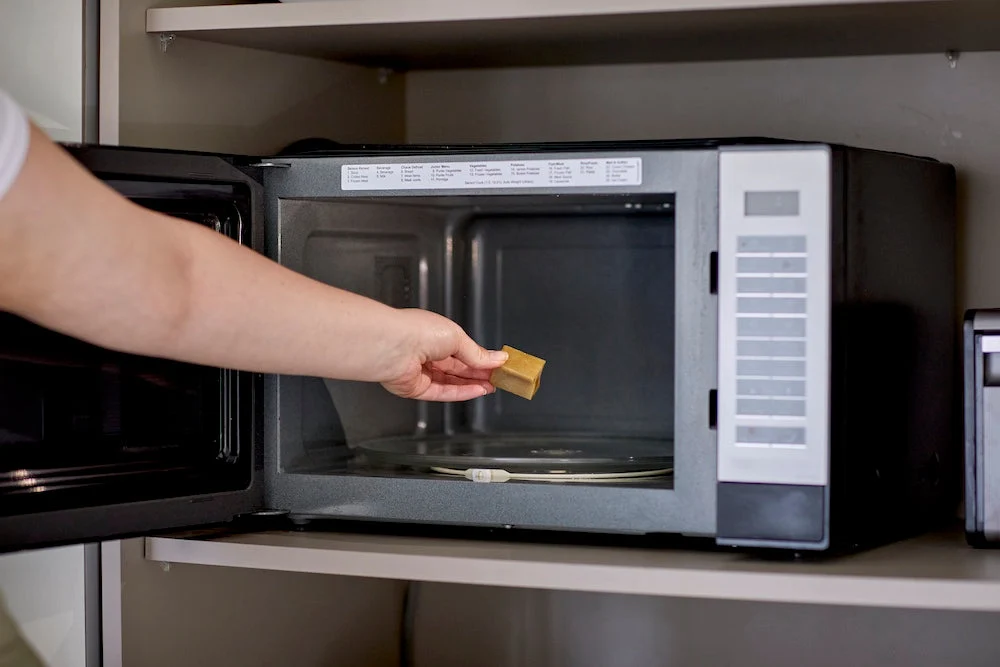
The end piece is where most of the risk lives. When the chew wears to a nub, soak in water and microwave it instead of throwing it away — but sources disagree on timing: a 5 to 10 minute soak with 30 to 90 seconds in one guide, a 5 minutes soak with 45 to 60 seconds in another, 45 seconds with 1 minute cool in a third. All agree on the result: the nub puffs into a crunchy snack, a puffed chew your dog can finish safely — but remember to let cool completely first, and use a chew holder for gulpers.
The guides agree on two more things: an oven does not puff the nub, and refrigerating a chew leaves it fragile when cold and prone to cracking. Treat the puff as a way to use up the end piece, not as a safety fix.
Six steps:
- Size first — choose by weight and chewing style.
- Calm spot — offer it somewhere calm, away from other dogs.
- Watch closely — see how fast the chew wears down.
- Hold the chew — hold one end while the dog works the other.
- Take the end piece away — once it could be swallowed whole.
- Puff the nub — soak and microwave, 45 to 90 seconds until it puffs, then cool before offering.
What Should You Do With the End Piece of a Yak Chew?
The end piece of a yak chew should be soaked in water, microwaved until it puffs, cooled completely, and then given as a crunchy snack — never left for the dog to swallow whole.
The nub is the most dangerous part of the chew and the most useful, and the difference is what you do with it. The same softening trick that saves the nub is also what makes the chew usable for the dogs that struggle with it most. For puppies, the same trick helps: puppies that still gnaw rather than bite can manage a softened piece, and senior dogs with worn teeth can enjoy the puff long after the hard chew is beyond them — the puff can soften into something gentle, where the dry chew cannot.
For puppies, the rules are narrow. Wait until the puppy is old enough to gnaw instead of trying to bite off chunks, pick a size for the puppy’s current weight, keep short sessions and stay close the whole time. If the puppy has sensitive gums, soak 10 minutes to soften the chew before offering it. The age guidance disagrees across sources — one accepts 8 weeks in supervised portions, another cautions that owners of 5 to 7 lb puppies should ask a vet first — and the biology explains the caution: permanent teeth start erupting around 12 weeks and are all in by six months, so a hard chew lands on a mouth that is still changing.
Are Yak Chews Safe for Puppies and Senior Dogs?
Yak chews are not safe for most puppies and senior dogs — their teeth are the weakest in the house, and this is the hardest chew in it.
The groups that should skip the chew are clear. Puppies and older dogs top the list, along with small breeds, power chewers, and any dog with a dairy allergy or dairy sensitivity. Any dog with cracked teeth or weak teeth is out immediately, as is any dog with a swallowing habit — a dog that gulps instead of gnawing is the dog most likely to take a piece whole, and jaw issues make it worse, because a sore jaw changes how a dog bites and where the force lands. And for dogs on food trials or a limited-ingredient diet, the chew brings extra animal proteins that can break the trial before it tells you anything.
The costs of getting it wrong are not abstract: gas and loose stools are the mild end; gut obstruction is the serious one, and heavy chewers are most at risk because they are the ones who swallow large pieces. The only dog that clears every bar is a strong adult with healthy teeth — and even then, a dental exam is what confirms it, because most dogs over three already carry some gum disease.
Which Dogs Should Not Have Yak Chews?
The dogs that should not have yak chews are puppies, seniors, small breeds, power chewers and dairy-sensitive dogs — and the honest follow-up is that the usual replacements are not automatically safer.
Owners who take a yak chew away often reach for bully sticks instead, and the swap is not the upgrade it looks like: bully sticks are calorie-dense, and the last inches swallowed whole carry their own choking risk. For teeth, elk antlers are worse — a leading cause of fractures, precisely because an antler lasts longest: it is the hardest chew of all. Then there is rawhide, which trades the tooth problem for a gut problem, with poor digestibility and processing chemicals that make it the one chew most vets say to avoid entirely.
The safer-looking option has its own limits. VOHC-accepted dental chews carry a seal for plaque control and tartar control, not for hardness, and the seal’s own protocol counts fracture and obstruction as safety issues — while the VOHC is not a regulator and offers no safety guarantee. Labels deserve the same suspicion: one histology study checked 10 chews against their labels and found skin layers that contradicted the label in two and bacterial organisms or fungal organisms in four. What matters more is not longevity or cost per hour, but whether the chew suits the dog in front of you — and for a dog that should not have a hard chew, no alternative on this list is automatically the right one.
Yak Chews vs Bully Sticks, Antlers and Rawhide: Which Is Safer?
No chew in this comparison is risk-free, so the safer choice is the one whose risks you can actually manage for your dog.
The table is qualitative — no study ranks chews by hardness — but the pattern holds: hardness buys durability and sells tooth risk; softness buys safety and sells gut risk.
Chew | Fracture risk | Digestibility | Puppy / senior |
|---|---|---|---|
Yak chew | High | Digestible | 8+ weeks |
Bully stick | Disputed | Fully edible | Supervised only |
Antler | High, a leading cause | Minimal | Adults only |
Rawhide | Varies | Poor | No |
VOHC chew | Reportable issue | Varies | Depends |
If the worst happens, act fast. A fracture emergency follows broken tooth steps: stop the chewing, check for bleeding and swelling, watch for emergency signs: pawing, refusing food, flinching — and book a vet visit the same day, because dogs hide pain signs well.
The comparison stops short. A dog on an elimination diet lives by food trial rules, and milk proteins can break a trial, and cost budgeting matters too: the price per chew means little next to the cost per hour of chewing. For tooth safety, choose a dental chew with a VOHC seal for plaque and tartar control — the seal covers plaque, not hardness.
Practical matters: shelf life is long in storage in a cool dry place, and the label is worth reading: label checks, a real versus imitation comparison, an ingredient list check and the milk source tell you whether you hold a real yak chew or an imitation.
What the Competitors Did Not Cover
The sources agree on the basics and skip the details that decide whether this chew helps or hurts your dog. A yak chew is a cheese chew, a milk-based chew made from Churpi cheese: a hard cheese chew from a lime-set curd, an old Himalayan herder food and a dried milk chew that looks like bone. It is not real bones, it has no actual bone — the bone shape is a bone lookalike, a chew not bone in any sense that matters.
What the guides skip, in order: first, the fracture protocol — stop the chew, check for bleeding, swelling and loose fragments, and see a vet the same day, because a cracked carnassial can abscess quietly for weeks. Second, the diet clash — a dog on an elimination diet cannot have a milk-protein chew without breaking the trial. Third, storage — a cool, dry place keeps the chew sound for months; damp or sun-baked storage turns it brittle.
And fourth, the label, where most owners get fooled:
- Ingredients: milk, salt and lime juice only — preservatives, colors or grain fillers mean an imitation.
- Milk source: yak milk first — cow milk as a blend is normal, but it should say so.
- Hardness: press it with a fingernail first — no dent means too hard.
- Size: the pack should size by weight, not vague words like “medium”.
- Smell and look: pale yellow, faintly smoky — chalk-white or greasy means poor drying.