Quick answer
- Yak milk chews are hard, dried dairy chews made from yak milk, cow milk, lime juice, and salt. They contain no rawhide.
- They suit healthy adult dogs that gnaw patiently. Skip them for puppies under about 6 months, dogs with dental disease, and dogs that bite straight down.
- A yak milk chew fails the thumbnail test, so the right size and close supervision matter more than they do with softer chews.
- One chew can last a strong chewer a few hours and a gentle chewer several days. Take it away once your dog could swallow it whole.
Yak milk chews give your dog a long, slow chew built on dried dairy instead of hide or bone. They also raise fair questions. What goes into one? How do makers turn liquid milk into something this hard? Is a yak milk chew good for your dog’s teeth, and is it safe for a puppy? This guide answers each question, shows you how to read a label, and explains how to turn the last piece into a crunchy treat in the microwave.
What Are Yak Milk Chews?
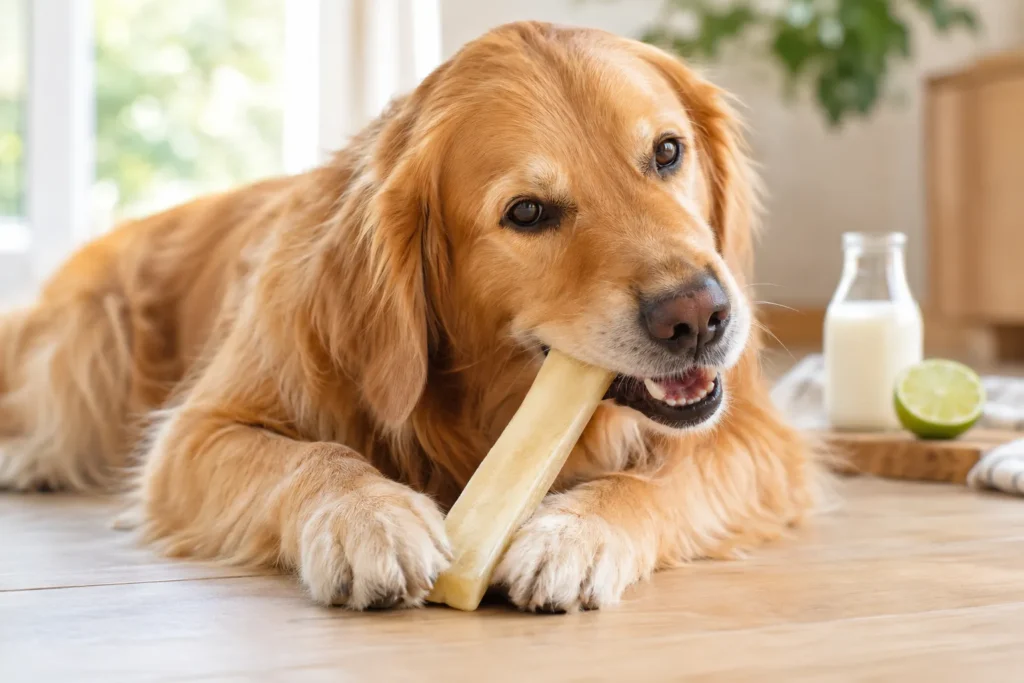
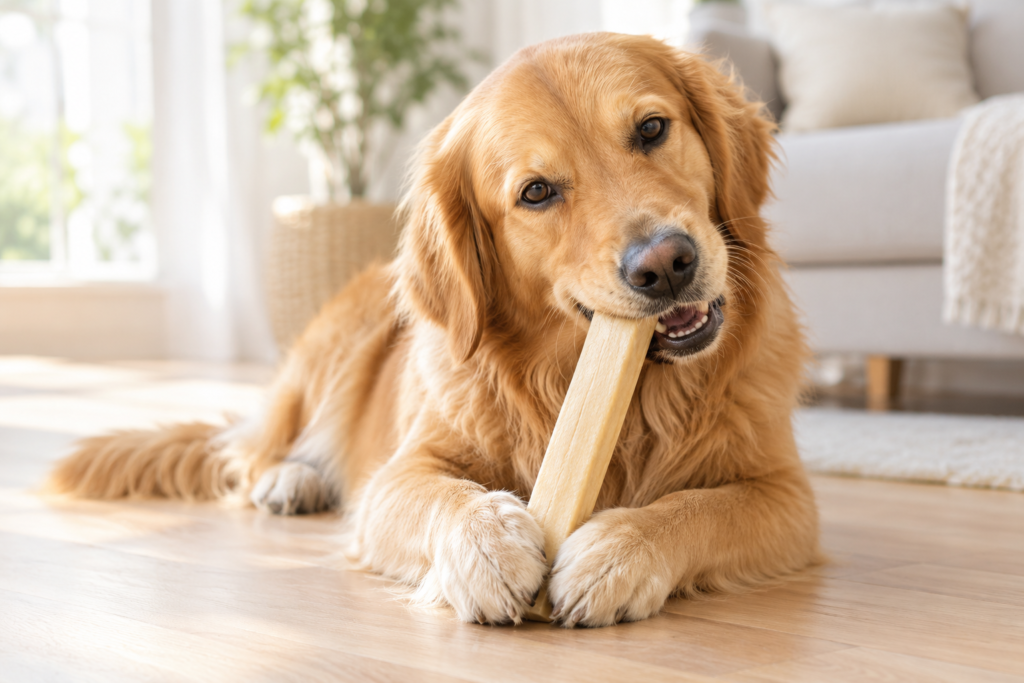
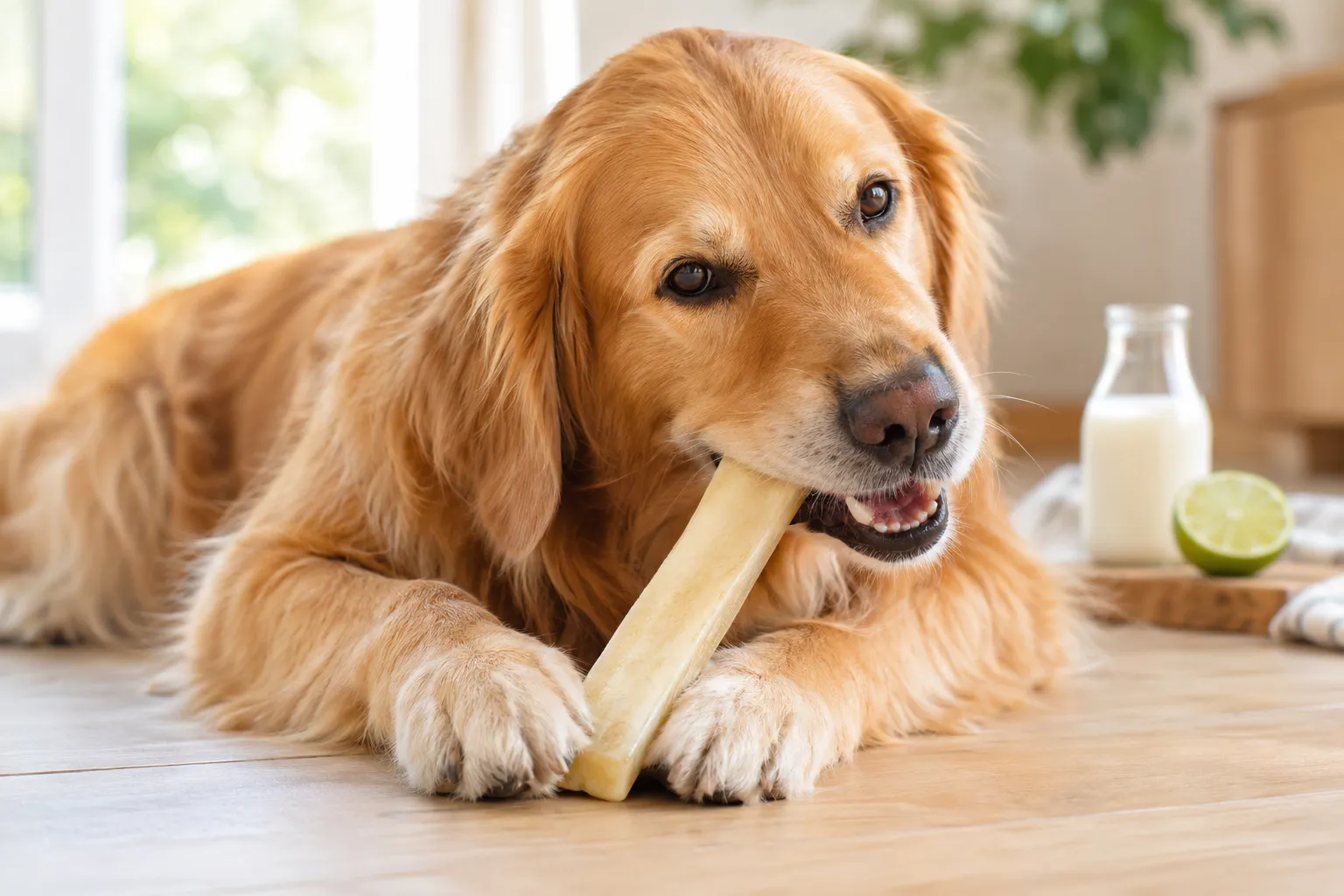
A yak milk chew is a hard, dried, cheese-style chew from the Himalayas. Makers curdle milk with lime juice, press the curds, and dry them until they turn rock hard. A dog gnaws the chew slowly, and the surface tends to soften as the dog works on it.
You will see the same product sold as a yak milk dog chew, Himalayan yak chew, or yak cheese chew. The names differ, but the idea stays the same: a long-lasting chew with no hide, no bone, and no splinters. If you want to understand the appeal, read why dogs love yak cheese chews.
What Is Inside a Yak Milk Chew?
Most yak milk chews contain four ingredients.
| Ingredient | What it does |
|---|---|
| Yak milk | Forms the base of the chew and gives it its dairy flavor |
| Cow milk | Often blended with yak milk to make the chew |
| Lime juice | Curdles the milk so the curds form |
| Salt | Adds flavor and acts as a natural preservative |
Read the label before you buy. A “yak milk chew” is not always made from yak milk alone. Many brands blend yak and cow milk, and some sell a separate 100% yak milk version. Flavored chews add ingredients such as peanut butter or turmeric, so check each one against your dog’s allergies.
Every chew in this category contains dairy. If your dog has a known dairy sensitivity, ask your vet before you offer one.
How Are Yak Milk Chews Made?
Makers turn milk into a chew in six steps, and drying takes the longest. Yaksy follows this traditional Himalayan method in Nepal:
- Collect the milk. Herders gather fresh yak and cow milk from free-grazing herds.
- Pasteurize it. Gentle heat treatment removes harmful bacteria.
- Curdle it. Lime juice separates the milk into curds.
- Press and shape. Workers press the curds by hand into firm shapes.
- Dry and age. The chews air-dry slowly under controlled conditions. This step creates the hard texture and the shelf life.
- Inspect and pack. Staff check moisture and quality before they seal each pack.
You can see the full method in how Yaksy dog chews are made. The makers also repurpose the leftover whey as animal feed, so little goes to waste.
Can You Make Yak Milk Dog Chews at Home?
We do not recommend it. The drying step is the hard part. It needs steady, controlled conditions, and a chew that dries too slowly can grow mold or bacteria. The U.S. Food and Drug Administration notes that pet food and treats can carry harmful bacteria such as Salmonella and Listeria. A home batch also lacks the moisture and lab checks that a professional maker runs. Buy from a brand that tests every batch.
Are Yak Milk Chews Good for Dogs?
For healthy adult dogs that chew slowly, yes. A yak milk chew offers several real benefits:
- A long chew session. Hard, dense chews keep a dog busy far longer than a soft treat.
- No rawhide. Yak milk chews belong to the family of rawhide free dog chews, so they avoid the hide material that many vets warn about.
- Digestible pieces. Small, softened bits digest like food, though a large swallowed chunk can still block the gut.
- An outlet for chewing. Dogs that chew shoes and furniture often need a better target. A good chew helps, and it works best alongside advice on how to stop dog chewing that you do not want.
The limits matter just as much. Yak milk chews are very hard, they add calories, they contain dairy, and any chew can cause choking once it shrinks. Vets also disagree about them. Some advise against all yak chews because of the tooth-fracture risk, while others accept them for suitable dogs under supervision. That disagreement is real, so talk to your own vet. For a deeper look, read whether yak chews are safe for dogs.
Are Yak Milk Chews Good for Dogs’ Teeth?
They give teeth something to work against, but they can also crack a tooth, and hardness alone does not prove a chew cleans teeth. Cornell University’s veterinary college notes that fractured teeth are commonly caused by chewing very hard objects, and that most veterinary dentists use the thumbnail test. Press your thumbnail into the chew. If it leaves no dent, the chew is hard enough to risk a tooth. A fresh yak milk chew leaves no dent.
Your dog’s chewing style changes the risk. A dog that gnaws at an angle and works the chew slowly faces a lower risk than a dog that crunches straight down with its back teeth.
Ask your vet before you offer a yak milk chew if your dog:
- has broken, loose, or missing teeth, or gum disease
- is a senior with worn teeth
- is recovering from dental surgery
- crunches down hard on every chew
- has a dairy sensitivity
If dental health is your main goal, check the Veterinary Oral Health Council list. That group reviews research on chews and lists products that reduce plaque or tartar. A hard chew can support your dental routine, but it does not replace brushing.
Are Yak Milk Chews Safe for Puppies?
Wait until your puppy has its adult teeth, which usually means around 6 months. The American Kennel Club explains in its puppy teething timeline that puppies start losing baby teeth around 3 months and usually have all their adult teeth by about 6 months. During that window, the mouth is changing, and a very hard chew can damage developing teeth.
Your vet can confirm when your puppy and breed are ready. Until then, offer softer options made for puppies, such as flexible rubber toys or bully sticks, and stay close while your puppy chews.
How to Choose the Right Yak Milk Chew
Pick the chew by size, chewing style, and label.
- Size. Choose a chew clearly longer than your dog’s muzzle, measured from the nose to the jaw hinge. A chew that fits entirely inside the mouth can be swallowed whole.
- Chewing style. Gentle chewers do well with small or medium chews. Strong chewers need a larger size, but a bigger chew does not remove the dental risk.
- Flavor. Start with one flavor and watch your dog’s stomach before you try another.
- Label. Look for a short ingredient list, a clear country of origin, and proof that the maker tests each batch. If you want to compare brands, start with the best yak chew brands in the USA and UK.
How Long Do Yak Milk Chews Last?
A yak milk chew lasts from a few hours to several days. Yaksy says a gentle chewer may enjoy one for days, while a power chewer may finish it in hours. Three things decide the answer: the size of the chew, how hard your dog bites, and how often you offer it.
Expect a trade-off. The longer a chew lasts, the harder it usually is. Choose durability only after you have checked your dog’s teeth.
How to Microwave a Yak Milk Chew
Microwaving the leftover piece turns it into a crunchy, puffed treat. Yaksy suggests heating the nub for 30 to 60 seconds. Follow these steps:
- Wait until the chew is too small to hand over safely. Use only the leftover nub, never a full chew.
- Place the piece on a microwave-safe plate.
- Heat it for 30 seconds, then check it. Add time up to 60 seconds in total.
- Let the piece cool completely before you touch it. The inside can stay hot after the outside feels cool.
- Offer it under supervision, and take it away if your dog starts to gulp.
Safe Chewing Rules
- Stay in the room. Never leave your dog alone with a chew, and never offer one overnight or in a crate.
- Remove the last piece. Take the chew away once your dog could swallow it whole.
- Offer fresh water. Keep a bowl close during every session.
- Count the calories. Treat chews as part of your dog’s daily treat allowance.
- Store the chews well. Keep them in a sealed container in a cool, dry place away from moisture and direct sunlight. The FDA gives similar advice on storing pet food and treats.
- Wash your hands. Do this after every handling session.
When Should You Call Your Vet?
Call your vet right away if your dog shows any of these signs after chewing:
- Choking: pawing at the mouth, repeated gagging, labored breathing, or heavy drooling. The American Kennel Club lists the signs in its guide to dog choking. Treat collapse as an emergency.
- Possible blockage: vomiting, loss of appetite, lethargy, belly pain, or straining to pass stool.
- Possible cracked tooth: yelping, dropping the chew, pawing at the mouth, or refusing hard food.
If a chew seems contaminated or causes a problem, report it to the maker and to the FDA through its Pet Food Safety Reporting Portal.
Where Yaksy Yak Milk Chews Fit
Yaksy yak milk chews contain yak milk, cow milk, lime juice, and a pinch of Himalayan salt, with no artificial flavors, colors, or preservatives. Artisans craft them by hand in Nepal, and Yaksy states that its chews are ISO 22000 and HACCP certified and tested batch by batch. Read more about the team that is handmade in Nepal.
You can choose from flavors that include strawberry, peanut butter, turmeric, and mint. The peanut butter yak chew works well for picky dogs. Prices start at $11, and larger sizes reach $32. A 30-day money-back guarantee covers each order. If you also want a softer option, compare these chews with other yak cheese chews in the guide.
Yaksy chews carry the same limits as every yak milk chew. They are very hard, they contain dairy, and they do not suit puppies under about 6 months or dogs with dental disease.
Frequently Asked Questions
Are yak milk chews good for dogs?
They suit healthy adult dogs that gnaw slowly. The chews last long, contain no rawhide, and digest in small pieces. They are also very hard and contain dairy, so some dogs should skip them.
Are yak milk chews safe for dogs?
Most healthy adult dogs can chew them safely when you pick the right size and supervise every session. Hardness, choking at the end, and dairy sensitivity remain the main risks. Ask your vet if your dog has dental or digestive problems.
Are yak milk chews good for dogs’ teeth?
They can support a dental routine, but they can also fracture a tooth because they fail the thumbnail test. They do not replace brushing or vet dental care. Check the VOHC list if you want chews with proven plaque or tartar results.
Are yak milk chews OK for puppies, and what age can puppies have them?
Wait until your puppy has adult teeth, usually around 6 months. Puppies lose baby teeth between about 3 and 6 months, and very hard chews can damage developing teeth. Your vet can confirm the right age for your puppy.
How long do yak milk chews last?
A chew can last a power chewer a few hours and a gentle chewer several days. Size, bite strength, and how often you offer the chew all change the answer.
Can you microwave a yak milk dog chew?
Yes, but only the small leftover nub. Heat it for 30 to 60 seconds so it puffs into a crunchy treat. Let it cool completely, and supervise your dog.
Are yak milk chews made from 100% yak milk?
Not always. Many brands blend yak milk and cow milk, and some sell a separate 100% yak milk chew. Read the ingredient list to see which one you are buying.
How do you make yak milk dog chews?
Makers collect milk, pasteurize it, curdle it with lime juice, press the curds, and dry them slowly until they turn hard. We do not recommend making them at home because the drying step is hard to control.
The Bottom Line
A yak milk chew works well for a healthy adult dog that gnaws patiently, and it works poorly for puppies, dogs with weak teeth, and dogs that crunch. Before you buy, press your thumbnail into the chew, measure your dog’s muzzle, and ask your vet if you have any doubt about your dog’s teeth. If your dog fits the profile, shop Yaksy yak milk chews and use the 30-day guarantee to see how your dog responds.
This article offers general information and does not replace advice from your veterinarian. Talk to your vet before you introduce any hard chew to a puppy, a senior dog, or a dog with dental or digestive problems.