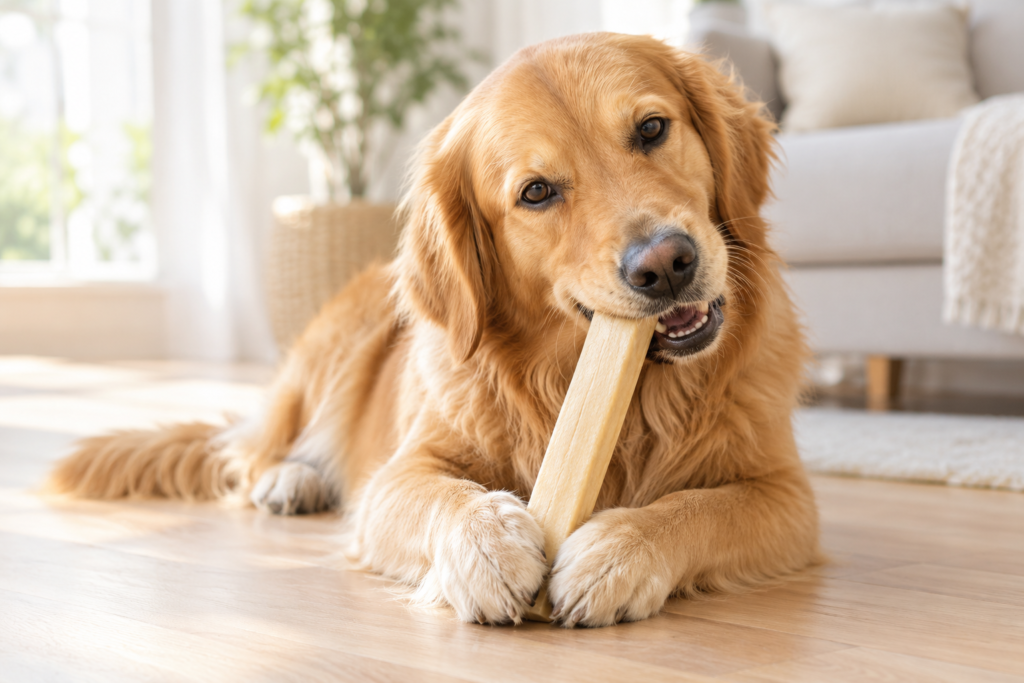

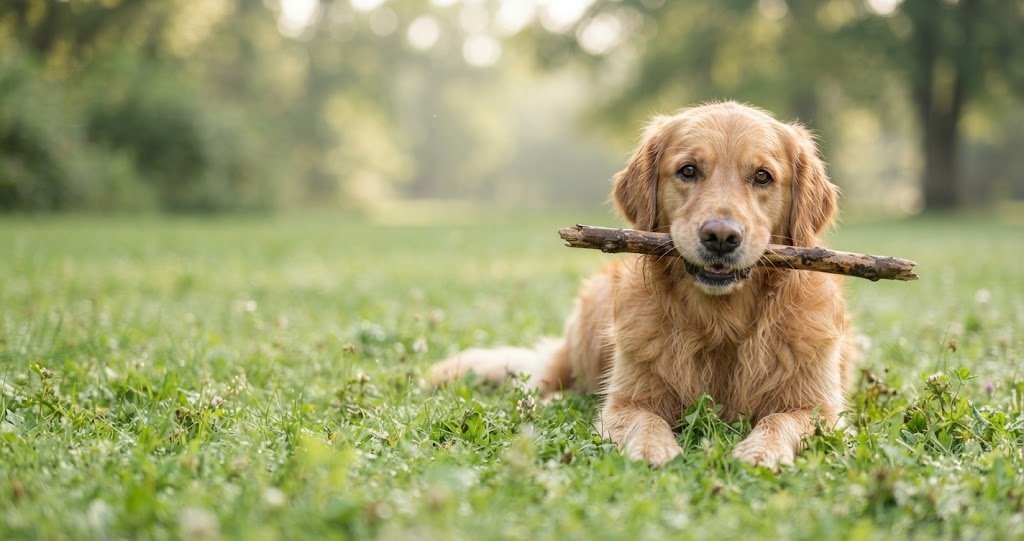
Quick answer: Dogs eat sticks because chewing is a natural instinct, and sticks feel, smell, and taste interesting. Boredom, teething, stress, and attention-seeking often play a part. In some dogs, constant stick eating signals pica or a health problem. Sticks are not safe to eat, because they can splinter, block the gut, or carry toxins. Offer a safe chew instead, and see your vet if the habit is compulsive.
If your dog grabs every stick on your walk, you are not alone. This guide explains why dogs eat sticks (and bark or wood), which risks matter most, what to do if your dog swallowed one, and how to stop the habit for good.
Why Do Dogs Eat Sticks?
Most dogs have more than one reason. Use this table to spot the likely cause, then read the details below.
| Reason | Common signs | What helps |
|---|---|---|
| Natural chewing instinct | Chews many objects, mostly outdoors | Safe chews and toys |
| Teething | Puppy under about 6 months, sore gums | Puppy-safe teething toys |
| Boredom | Chews when left alone or after little exercise | More exercise and enrichment |
| Anxiety or stress | Chews during storms, separation, or changes | Calm routine, vet or trainer help |
| Attention seeking | Grabs a stick, then looks at you | Trade game, no chasing |
| Bone or prey instinct | Carries and guards sticks | Fetch toys, chew substitutes |
| Nutritional or medical cause | Eats sticks constantly, other changes too | Vet check |
| Pica | Swallows non-food items, not just chews them | Vet and behavior plan |
1. A natural chewing instinct
Chewing is normal dog behavior. Dogs explore the world with their mouths, and sticks give them texture, smell, and resistance. A stick also smells of soil, plants, and other animals, which makes it far more interesting than a plain toy.
2. Teething puppies
Puppies chew to ease sore gums while their adult teeth come in. Sticks are easy to find and feel firm, so they become a favorite. Sticks can also splinter and break developing teeth, so swap them for a puppy-safe teething toy. Be careful with very hard chews too, and read whether yak chews are safe for puppies before you try one.
3. Boredom
A dog with too little exercise or mental work will invent a job. Stick chewing is an easy, always-available one. If your dog chews sticks mostly at home or in the yard, boredom is a likely cause.
4. Anxiety or stress
Repetitive chewing can calm a worried dog. Dogs may chew more during separation, noisy storms, or big changes at home. If stress is behind the habit, the stick is a symptom, not the real problem.
5. Attention seeking
If your dog picks up a stick and looks at you, they may have learned that sticks start a chase. Running after your dog rewards the behavior, even if you scold them.
6. Bone and prey instinct
Sticks resemble bones, and many dogs enjoy carrying and fetching them. Retrievers and other bird-hunting breeds often feel a strong urge to carry things in their mouths, and a stick satisfies it.
7. Nutritional or medical causes
Some dogs eat non-food items when something is wrong, such as a poor or unbalanced diet, a digestive problem, or another health issue. Dogs do not get useful nutrition from wood. If your dog suddenly starts eating sticks, or shows other changes in appetite, weight, or stool, book a vet visit.
8. Pica
Pica means a dog repeatedly eats non-food items, such as sticks, rocks, dirt, or fabric. A dog with pica does not just chew; they swallow what they find. Pica can have behavioral or medical causes, so talk to your vet if the habit is constant or hard to interrupt.
Why Do Dogs Eat Sticks and Bark?
Bark gives dogs the same sensory rewards as the stick itself: a rough texture, an earthy smell, and something firm to grind down. Chewing trees and bark can wear teeth and leave splinters in the mouth. Bark and wood from some trees can also be toxic.
The reasons are the same as the list above, and so is the fix. A dog that eats sticks and wood often needs more chewing options, more exercise, or a check-up.
Is It Bad for Dogs to Eat Sticks?
Yes. Chewing a stick is a risk, and swallowing one is a bigger risk. Vets warn about these problems:
- Mouth injuries. Splinters can lodge in the gums, tongue, or throat and cause infection.
- Choking. A broken piece can wedge at the back of the throat.
- Blockage or perforation. Swallowed wood can block the intestines or pierce the digestive tract. Veterinary clinics have treated dogs that needed emergency surgery after swallowing a stick.
- Broken teeth. Hard wood can crack or wear teeth.
- Toxic wood. Some trees, including black walnut, black cherry, and yew, can poison dogs. A veterinary study of 93 dogs found that dogs that ate black walnut wood often developed neurologic or muscle signs (see the study in the Journal of the American Veterinary Medical Association).
- Germs and chemicals. A stick can carry mold, animal waste, or treated wood chemicals.
Owners often think a small twig is harmless. Even small pieces can cause trouble, and some dogs pass them without any problem. You cannot predict which dog will have a problem, so the safest rule is to stop stick eating early.
What to Do If Your Dog Ate a Stick
- Stay calm and take the stick away. Check your dog’s mouth for splinters or bleeding, but do not put your hand where your dog could bite.
- Note the size and type. Remember how much your dog swallowed and what tree it came from, if you know.
- Do not make your dog vomit unless your vet tells you to. Sharp pieces can cause more damage on the way back up.
- Call your vet. Describe the stick and your dog’s size, and follow their advice.
- Watch closely for 24 to 48 hours if your vet says to monitor at home.
If you think the wood was toxic, call your vet or an animal poison hotline right away. In the USA, you can contact the ASPCA Animal Poison Control Center (a consultation fee may apply).
Warning signs that need a vet
Call your vet or go to an emergency clinic if you see any of these:
- Gagging, drooling, retching, or repeated vomiting
- Blood in the mouth, vomit, or stool
- Pawing at the mouth or trouble swallowing
- Loss of appetite or lethargy
- A swollen or painful belly
- Straining to pass stool, or no stool
- Coughing or breathing trouble
Choking and trouble breathing are emergencies. Go to an emergency vet immediately.
How to Stop Your Dog From Eating Sticks
A mix of prevention, training, and good alternatives works best.
- Check the basics. Ask your vet to rule out health, diet, or dental causes, especially if the habit is new or constant.
- Add exercise. A tired dog is less likely to hunt for something to chew. Increase walks and play to suit your dog’s age and breed.
- Add mental work. Use puzzle feeders, sniff games, and short training sessions.
- Teach “drop it” and “leave it.” Reward your dog with a treat or toy every time they release a stick. This turns stick-grabbing into a trade.
- Do not chase. If your dog runs off with a stick, move away calmly and call them to you.
- Clean up the yard. Remove fallen branches and cut back low foliage your dog can reach.
- Bring a better option. Carry a safe fetch toy and a treat on walks.
- Use a leash in stick-heavy areas. Walk your dog on a short lead where sticks are common until the habit improves.
- Get help for compulsive chewing. A veterinarian or certified trainer can build a plan for pica or anxiety.
For a longer plan, read our guide on how to stop dog chewing.
Safe Alternatives to Sticks
Dogs need to chew, so give them something safer to chew on. Match the chew to your dog’s age, size, and teeth:
- Rubber chew toys and fetch toys made for dogs, which flex slightly and do not splinter
- Dental chews accepted by the Veterinary Oral Health Council (VOHC)
- Puppy teething toys for dogs under about six months
- Long-lasting natural chews, with supervision, such as yak cheese chews or bully sticks
No chew is risk-free. Yak chews, for example, are very hard and can crack teeth, so read our guide on whether yak chews are safe for dogs before you choose one. Always supervise, pick the right size, and take away small leftover pieces. If you decide to try one, you can browse our Himalayan yak chews and see how we make yak dog chews.
When to See a Vet
See your vet if your dog:
- Eats sticks constantly, or swallows them rather than chewing
- Also eats rocks, dirt, fabric, or other non-food items
- Has vomiting, diarrhea, weight loss, or appetite changes
- Seems anxious or compulsive about chewing
- Has bleeding gums, a broken tooth, or trouble eating
Your vet can check for health and dental problems, and refer you to a behaviorist if needed.
Frequently Asked Questions
Why do dogs eat sticks?
Dogs eat sticks because chewing is natural and sticks offer interesting texture and smell. Teething, boredom, stress, attention seeking, and sometimes pica or a health problem also contribute.
Why do dogs eat sticks and bark?
Bark gives dogs a rough texture and an earthy smell, just like a stick. Dogs chew it for the same reasons as sticks, but bark and wood from some trees can be toxic or splinter.
Why do dogs eat sticks and wood?
Wood is firm, scented, and easy to find. Boredom, anxiety, teething, and pica are the most common causes. Constant wood eating deserves a vet check.
Is it normal for a puppy to eat sticks?
Puppies often mouth and chew sticks while exploring and teething. It is common, but still risky, so redirect your puppy to a safe teething toy.
Is my dog eating sticks because of a nutrient deficiency?
Sometimes a diet or health problem plays a role, but most dogs eat sticks for behavioral reasons. Ask your vet to check your dog’s diet and health if the habit is new or constant.
Are any sticks safe for dogs?
No stick is guaranteed safe. Even non-toxic wood can splinter and cause blockages, so choose a dog-safe toy instead.
What happens if my dog eats a small piece of stick?
Some dogs pass a small piece without trouble, but others get a blockage or injury. Call your vet for advice, and watch for vomiting, belly pain, or changes in stool.
How do I stop my dog eating sticks on walks?
Teach “drop it” and “leave it,” bring a fetch toy as a trade, keep your dog on a lead where sticks are common, and avoid chasing a dog that grabs one. For a full plan, see our guide on how to stop dog chewing.
Final Thoughts
Dogs eat sticks for a mix of instinct, boredom, teething, stress, and sometimes health reasons. Because sticks can splinter, block the gut, or poison your dog, the best plan is to redirect the urge. Give safe chews, add exercise and training, and talk to your vet if the habit is constant.
Related Reading
- How to Stop Dog Chewing: A Complete Guide for Puppies and Adult Dogs
- Are Yak Chews Safe for Dogs? The Complete Vet-Informed Guide
- Yak Cheese Chews: What They Are, Benefits, and Buying Guide
- What Are Bully Sticks Made Of? Ingredients, Process & Safety
This article is for general information and does not replace advice from your veterinarian. Contact your vet or an emergency clinic if your dog swallowed a stick or shows signs of illness.