
What Can You Do at Home for a Dog’s Upset Stomach?
The most dependable home care for a dog’s upset stomach is a short rest from food (for healthy adult dogs only), constant access to fresh water, and then a small, plain meal of boiled chicken and white rice. If signs last beyond two days, or any red-flag symptom appears, see a vet.
A dog with gastroenteritis rarely signals it politely. You may see drooling, lip smacking, chattering teeth, gulping, or vomiting on the carpet. In that moment you need a remedy that is gentle, dull, and quick to arrange. Most mild episodes pass within a day or two, but symptoms that continue beyond 48 hours need professional care.
Keep the plain meal truly plain: skinless, boneless chicken with no salt, oil, or spices. If loose stools are part of the picture, a spoonful of plain pumpkin can be stirred in.
The riskiest shortcuts sit in your bathroom cupboard. Ibuprofen, paracetamol, and several anti-diarrhoea or antacid products are unsafe for dogs, and kitchen items such as chocolate, grapes, onion, and xylitol can be just as dangerous. The safest instinct is to reach for the food bowl, not the pills.
What Exactly Is an Upset Stomach in Dogs?
An upset stomach in dogs is a disturbance somewhere along the digestive tract that usually settles within a day or two.
Because trouble can start anywhere between the mouth and the bowel, one dog may show nausea or gagging while another has belly cramping, and owners cannot easily judge which signs are harmless. When the picture stays unclear, vets begin with a physical exam and history, then may run a complete blood count, a chemistry panel, urine testing, an X-ray, or an ultrasound. Endoscopy is kept for stubborn cases.
The outliers deserve respect. A tight, swollen belly can signal bloat (gastric dilatation-volvulus), which threatens a dog’s life, and bloating paired with unproductive retching is a reason to leave for a clinic immediately. Repeated episodes may reflect chronic disease, including liver disease, rather than a passing bug.
Vomiting vs. regurgitation: why the difference matters
Vomiting is active: the dog heaves, the abdomen contracts, and the material is usually partly digested. Regurgitation is passive: food comes up effortlessly, often soon after eating, and looks tube-shaped or undigested. Regurgitation can point to a problem in the oesophagus rather than the stomach, so mention exactly what you saw when you call your vet.
How Can You Tell Your Dog’s Stomach Is Upset?
You can usually tell from changes in energy, eating behaviour, posture, and stool.
- Energy: unusual tiredness, hiding, or reluctance to play.
- Appetite: skipping meals, or eating grass in a frantic way.
- Mouth signs: drooling, lip smacking, gulping, or repeated swallowing, all of which can point to nausea.
- Posture: a dog in pain may stretch its front legs forward with its hind end in the air (the “prayer position”).
- Gut noises: loud rumbling, persistent belching, or excess gas.
- Stool: loose stool, mucus, straining, or stomach contents that resemble coffee grounds all warrant attention. Parasites such as Giardia can sit behind stubborn loose stools.
Because an upset can begin high in the oesophagus and finish at the rectum, signs vary widely. Research from the Royal Veterinary College in 2019 found that acute bouts of loose stool affect over 8% of UK dogs each year, so owners are far from alone.
Check for dehydration
Dehydration is the hidden danger. Run the skin elasticity test whenever your dog is unwell:
- Gently pinch a fold of skin between your dog’s shoulder blades.
- Let go and watch how quickly it flattens.
- Skin that snaps back is a good sign. A slow return, or tented skin that stays peaked, means you should call the vet.
Also check the gums. They should be moist and pink. Dry, sticky, or pale gums are a warning sign. A vet can restore fluids directly, including by IV drip.
What Causes a Dog’s Stomach to Get Upset?
A dog’s stomach usually gets upset because something disrupts the digestive tract, and the culprit is more often a trigger in the bowl or the household than a rare disease.
Dietary causes
- Dairy products, fatty table scraps, spicy leftovers, and grapes or raisins cause the most avoidable trouble.
- Eating too fast or gulping air. A slow-feeder bowl can help.
- A sudden change of food.
- Raiding the bin, compost heap, or picking things up on walks.
Emotional causes
Stress from moving house, a new baby, boarding, loud noises, fireworks, or storms can show up as vomiting or loose stools.
Medical causes
- Infections: bacteria such as Clostridium and Salmonella, viruses such as parvovirus, and parasites such as Giardia and worms. Vets often check a faecal sample.
- Pancreatitis, kidney disease, liver disease, and problems with the gallbladder.
- Inflammatory bowel disease and other immune-mediated conditions.
- Food allergies or intolerances.
- An imbalance of gut bacteria.
- A blockage from a swallowed object, including splintered cooked bones, which may need surgery.
- Heatstroke, which can also upset the stomach.
Dogs with underlying conditions such as diabetes need extra care, because even a mild upset can throw their routine off.
Should You Withhold Food From a Dog With an Upset Stomach?
For a healthy adult dog, withholding food for 12 to 24 hours can give the gut time to settle. Puppies, toy breeds, senior dogs, diabetic dogs, and dogs on regular medication should not skip meals without a vet’s approval.
The pause gives an irritated gut a chance to calm. Water stays available throughout, offered in small, frequent amounts if the dog vomits after big gulps. A dog with a reduced appetite or a little yellow bile in an otherwise bright, drinking dog is not automatically an emergency, though repeated episodes are. Most simple upsets settle in 24 to 48 hours.
Keep the sick-day basics tight:
- No human medications.
- No new supplements until your dog is symptom-free.
- Call the vet if your dog keeps refusing food, because in severe cases a feeding tube can be needed.
A simple routine:
- Watch your dog and note whether the vomiting is a one-off or repeated.
- Withhold food only if the dog is a healthy adult, keeping water in reach.
- Offer a small plain meal once your dog stays comfortable.
- Call the vet if signs continue beyond two days.
When appetite returns, lean ground beef (95% lean), white fish such as cod or coley, or plain turkey works as well as chicken.
How Do You Make a Bland Diet for a Dog?
A bland diet is lean protein cooked without fat, such as poached chicken, served with plain white rice (basmati or sona masoori work well), and no salt, oil, or spices.
Step by step
- Remove all skin, fat, and bones from the chicken.
- Poach or steam it. Never fry, because fatty food can restart the trouble.
- Cook the rice until soft, strain it, and mash it lightly.
- Mix roughly one part chicken to two parts rice.
- Let it cool to room temperature and serve in small portions.
- Offer four to six small meals through the day rather than one or two big ones.
For added fibre, stir in a spoonful of plain pumpkin purée or plain pumpkin powder.
If chicken seems to be the problem, a food allergy or intolerance may be the reason, and another lean protein is the answer.
Moving back to regular food
Abrupt diet changes are a common way to land back at square one. Transition over about a week:
- Days 1-2: 75% bland diet, 25% regular food.
- Days 3-4: 50/50.
- Days 5-6: 25% bland diet, 75% regular food.
- Day 7: 100% normal diet, if everything still looks good.
A bland diet is for short-term use only. It is not nutritionally complete, so do not feed it for more than a few days unless your vet says so. If your dog needs to change to a new food altogether, spread that switch across 7 to 10 days.
Does Pumpkin Really Help a Dog’s Upset Stomach?
Plain pumpkin helps mainly by supplying soluble fibre that firms up loose stool and keeps bowel movements regular. It also retains water, which can help with both diarrhoea and mild constipation.
- Use 100% plain pumpkin (purée or powder), never pie filling, which contains sugar and spices.
- In India, kaddu (yellow pumpkin), cooked plain and mashed, works in much the same way.
- Start small: about a teaspoon for a small dog and a tablespoon or two for a larger dog, stirred into the bland meal.
- Too much fibre can cause more loose stools, so more is not better.
- Dogs with diabetes or on prescription diets should have the vet approve pumpkin first.
Other gentle add-ons include plain boiled sweet potato and a little ripe banana, which supplies potassium. Treat pumpkin as one helpful tool, not a cure. If symptoms are getting worse, or soft stools drag on, pumpkin has done what it can and the vet should take over.
Can Probiotics Settle a Dog’s Stomach?
Probiotics can support recovery over time, but they are not an instant fix. Choose a product made for dogs and use it alongside vet guidance.
Probiotics aim to restore helpful bacteria in the intestines. They are often used after antibiotics or a food change, but dogs with weak immune systems or serious illness should only have them with the vet’s agreement.
- Mild loose stools after a food change usually settle within 1 to 2 days, so probiotics are for steadier recovery afterwards.
- Follow the label, which is weight-based. Do not guess the dose, and do not use human products without checking.
- Many owners start at half the label dose and build up over a week or so. Ask your vet if you are unsure.
- Keep mealtimes on a predictable routine, as settled households tend to see fewer upsets.
A tiny pinch of ginger is sometimes used for queasiness, but use it sparingly and check with your vet first.
How Do You Keep a Sick Dog Hydrated?
Leave fresh water within reach at all times, and tempt your dog to drink with gentle flavours.
- Place the bowl in a calm corner away from foot traffic.
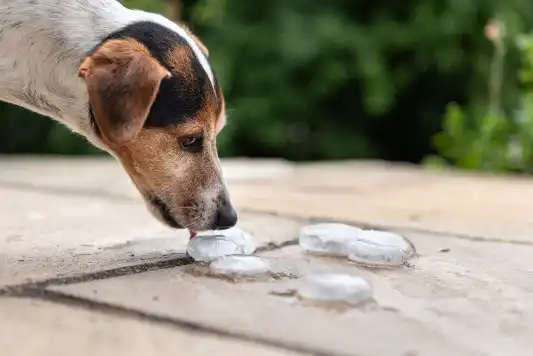
- Offer ice cubes or ice chips if your dog gulps and vomits.
- Offer a little plain rice water, or a weak, cooled tea steeped from coriander leaves (dhaniya).
- Any broth must be low-sodium and free of onion and garlic, both of which are toxic to dogs. Check the label.
- Do not use human oral rehydration salts or sports drinks unless your vet tells you to. Their balance is designed for people.
Water loss that goes unnoticed strains the organs. Watch for lethargy, dry or pale gums, sunken eyes, and tacky drool. Never reach for human painkillers, since the wrong drug can lead to kidney failure.
Which Other Kitchen Remedies Can Help a Dog’s Stomach?
Mild cases often respond to gentle single-ingredient foods served as small, frequent meals:
- Plain boiled sweet potato
- Plain scrambled or boiled egg, with no butter or oil
- Plain, unsweetened, lactose-free yoghurt in a very small amount, if your dog tolerates dairy
- Diluted, onion-free chicken broth as a drinking aid
- Cooled, boiled fennel (saunf) or cumin (jeera) water for mild gas
Every dog reacts differently, so check with your vet before trying any new remedy, especially herbs. Persistent stomach noises or belching are worth noting first.
Avoid spicy leftovers, such as dal with tadka, paneer in gravy, and festival sweets.
Is Exercise or Rest Better When a Dog’s Stomach Hurts?
Rest is better, with only brief strolls for toileting. Overactivity slows recovery.
- Avoid exertion in hot weather, because heatstroke itself can cause an upset stomach.
- Skip dog parks, day care, and playdates until your dog is well, since many stomach bugs are contagious.
- Wipe down paws after outings, and wash bowls and bedding.
- Restart meals at about a quarter of the normal portion at room temperature, and mix regular food back in over 3 to 4 days.
- If your dog turns floppy or collapses, go straight to the vet.
Which Foods Should a Dog With an Upset Stomach Avoid?
Avoid greasy meals, rich leftovers, and anything with added sugar or seasoning. Stay on bland food, then return to the usual diet.
Foods that are always unsafe for dogs
- Chocolate and cocoa
- Grapes and raisins
- Onion, garlic, and chives
- Xylitol (found in some sugar-free gum, sweets, and peanut butter)
- Macadamia nuts
- Alcohol
- Cooked bones
- Pumpkin pie filling or any sweetened pumpkin product
Practical prevention at home
- Secure kitchen counters and use dog-proof lids on bins.
- Fence off compost heaps.
- Remove toxic garden plants.
- If you suspect your dog has eaten a toxin, call the vet straight away. They may give activated charcoal or induce treatment, so do not try to make your dog vomit at home.
- If allergies are suspected, a vet may suggest a hydrolysed-protein diet.
When Does a Dog’s Upset Stomach Need a Vet?
Call a vet when symptoms last longer than two days, or sooner if blood, a hard swollen belly, or repeated vomiting appears.
| Warning sign | Why it matters | What to do |
|---|---|---|
| Symptoms beyond two days | Needs medical assessment | Book a vet visit |
| Blood in vomit or stool | May signal hemorrhagic gastroenteritis | Go to an emergency clinic |
| Tight, swollen belly with distress or retching | A life-threatening emergency (possible bloat) | Leave for the vet immediately |
| Water vomited back up | A fast route to dehydration | Call the vet |
| Puppy, senior, or small dog that keeps vomiting | They dehydrate and crash much faster | Call the vet the same day |
| Possible poison eaten | Time matters | Go straight to the vet and bring the packaging |
| Lethargy, pale gums, or collapse | Possible shock or severe dehydration | Emergency vet now |
What to tell your vet
Have these details ready: when signs began, how many times your dog vomited or passed stool, what it looked like, what your dog may have eaten, any medications or supplements, vaccination and deworming dates, and any other pets that are also unwell.
Possible treatments
Treatment depends on the cause. It can include fluids, anti-nausea medication, antibiotics for infection (with the vet setting the dosage), deworming, or a prescription gastrointestinal diet. Vets commonly use dog-appropriate drugs such as maropitant for nausea and omeprazole or famotidine for stomach acid. Never give these without a prescription.
What Is Colitis in Dogs and How Does It Differ From a Simple Upset Stomach?
Colitis is irritation of the large bowel. Unlike a simple upset stomach, it often keeps returning.
- Signs: loose stool with mucus or fresh blood, urgent accidents indoors, and tenesmus (straining near the anus). Weight loss can follow over time.
- Causes: bacteria, parasites, food reactions, stress and anxiety (including separation anxiety), and underlying diseases. Ulcers and other conditions need ruling out.
- Management is vet-led: usually a brief food pause, then a bland meal for 2 to 3 days. A probiotic with canine strains such as Enterococcus faecium and Lactobacillus acidophilus can support recovery, and regular deworming keeps parasites away.
- Escalate quickly if you see tacky gums, sunken eyes, or stringy drool.
How Can You Prevent Future Stomach Upsets in Dogs?
Prevention comes down to three things: a steady diet, a secured environment, and a low-stress routine.
- Feed consistently. Pick a quality complete food, measure portions, and avoid constant table scraps.
- Slow down gulpers. Use a slow-feeder bowl or smaller, more frequent meals.
- Stay on top of parasites. Keep worming and flea treatments on the calendar.
- Keep vaccinations current. This protects against infections such as parvovirus.
- Control scavenging. Train a reliable “leave it” and watch your dog on walks.
- Manage stress. Gentle exercise, short walks, and playtime are a good stress-buster. Plan ahead for fireworks, boarding, and travel.
- Support the gut. A weight-based daily probiotic or digestive supplement can help, but only after recovery and with your vet’s agreement.
- Make food changes gradually, over 7 to 10 days.
Quick Home-Care Checklist
- Check for red flags first: blood, a swollen belly, collapse, or suspected poison.
- Keep water available.
- Fast a healthy adult dog for 12 to 24 hours (not puppies, seniors, or diabetic dogs).
- Offer a small bland meal, then build up.
- Keep your dog rested and calm.
- Move back to normal food over about a week.
- See a vet if signs last beyond two days.
What can I give my dog for an upset stomach?
Give plenty of fresh water and, after any short rest from food your vet approves, a small plain meal of boiled chicken and rice. Home remedies suit only minor upsets, so ask your vet before giving anything else. Once vomiting has stopped, a spoonful or two of plain pumpkin can be added to meals.
How long does an upset stomach last in a dog?
Most mild cases clear within 24 to 48 hours. Anything beyond 48 hours needs a vet. A dehydrated dog may need IV fluids, and a vet workup is justified when episodes repeat. Recovery from deeper causes can take from a few days to a few weeks.
Is it safe to give my dog human medicine?
No. Never give a dog anything from your medicine cabinet unless a vet says so. Several human medications, and even some human foods, can harm dogs. Vets prescribe dog-appropriate drugs instead.
Can stress cause an upset stomach in my dog?
Yes. Boarding, fireworks, travel, and changes at home can all trigger loose stools or vomiting. Extra affection, daily exercise, and a settled schedule can make a real difference.
How do dogs lie down when their stomach hurts?
A dog with a sore stomach often drops its front legs low while keeping its rear raised. Look for restlessness, pacing, whining, and shivering alongside it, because these signs together make a vet visit more urgent.
What helps with dog gas and a bloated belly?
For mild gas, offer a little cooled water infused with boiled fennel (saunf) or cumin (jeera). Passing gas is common after a diet slip. But a tight, swollen abdomen with fruitless retching needs a vet at once.
Can I give my dog a daily supplement for gut health?
Yes, but only after recovery, not mid-illness. Wait at least 24 to 48 hours after signs stop, and follow the label’s weight-based amount.
Can I give my dog Pepto-Bismol or other human stomach remedies?
No. Many contain ingredients such as salicylates that can be harmful to dogs. Always ask your vet first.
Why is my dog eating grass and vomiting?
Some dogs eat grass when they feel nauseous, though many do it for no clear reason. Occasional grass eating is usually harmless. If it is frequent, or comes with repeated vomiting, lethargy, or loss of appetite, see your vet.
Can I give my puppy a bland diet?
Puppies dehydrate and develop low blood sugar quickly, so do not fast them. Call your vet the same day if a puppy vomits repeatedly or has diarrhoea, especially if the puppy is not fully vaccinated, because parvovirus is a serious risk.
Is pumpkin safe for dogs with diabetes?
Plain pumpkin is usually fine in small amounts, but check with your vet first because it adds carbohydrate and fibre that can affect blood sugar.