
Quick answer
- Rawhide free dog chews skip the animal-hide material that vets link to choking, blockages, and contamination.
- Rawhide free does not mean risk free. Hard chews can crack teeth, and any chew can become a choking hazard once it wears down.
- Pick a chew by your dog’s chewing style, mouth size, age, and tooth health. Then stay in the room while your dog chews.
- Hard chews such as yak cheese last longest. Softer chews such as bully sticks digest more easily but disappear faster.
Rawhide free dog chews give your dog something to gnaw without the hide-based material that many vets warn against. The label alone, though, does not tell you how safe a chew is, how long it will last, or whether it suits your dog. This guide explains what rawhide free means, compares the main chew types, and shows you how to match a chew to your dog’s mouth, teeth, and habits. It also covers where Yaksy yak chews fit in, including which dogs should skip them.
What Does Rawhide Free Mean on a Dog Chew?
A rawhide free dog chew contains no rawhide, the dried inner layer of animal hides, most often from cattle. Brands make dog chews rawhide free by using other materials instead: muscle, pork skin, sweet potato, dairy, or blends of protein, starch, and gelatin.
The phrase only tells you what is missing. It says nothing about hardness, calories, or digestibility. A chew can be rawhide free and still be very hard, very rich, or far too small for your dog. Read the ingredient list, not just the front of the bag.
Some rawhide free chews have a single ingredient. Bully sticks, for example, are made from beef pizzle. Others combine several ingredients, so check each one against your dog’s allergies and diet.
Why Do Vets Warn Against Rawhide?
Vets raise two main concerns about rawhide: choking or intestinal blockage, and contamination with chemicals or bacteria. Dogs that swallow large, softened pieces can end up with a blocked throat or gut, and some dogs also react to the chew with vomiting or diarrhea.
Contamination is a separate problem. The U.S. Food and Drug Administration notes that pet food and treats can carry harmful bacteria such as Salmonella and Listeria, which can sicken both pets and the people who handle them. That warning applies to every treat, not only rawhide, so wash your hands for at least 20 seconds after you handle any chew.
Vets do not agree on everything here. Some say careful owners can offer rawhide occasionally. Many now suggest digestible alternatives instead. Your own vet can judge the risk for your dog’s age, size, and chewing style.
Are Rawhide Free Chews Good for Dogs?
For many dogs, yes. Most rawhide free chews digest more predictably than rawhide, and many avoid heavy chemical processing. But no chew is risk free, and three problems stay in play.
Hard chews can crack teeth. The European pet food federation FEDIAF warns that chews which do not bend or soften quickly can cause a painful tooth fracture. It also notes that no legal hardness standard exists for dog chews, so manufacturers set their own.
Any chew can cause choking at the end. As a chew wears down, your dog can swallow the last piece whole. FEDIAF advises supervising dogs with every chew and treat for this reason.
Chews add calories. AAFCO treats chews as treats, meaning you should give them sparingly. Count them in your dog’s daily intake, especially for dogs that gain weight easily.
Try the thumbnail test before you buy. Press your thumbnail firmly into the chew. If it leaves a dent, the chew has some give. If it leaves no mark, the chew is hard enough to risk a tooth in a dog that bites straight down.
What Are the Best Rawhide Free Dog Chews?
No single chew is best for every dog. The best rawhide free dog chews match your dog’s chewing style, mouth size, and tooth health. This table compares the most common options.
| Chew type | Best for | Watch out for |
|---|---|---|
| Yak cheese chews | Healthy adult dogs that gnaw patiently and want a long session | Very hard. Skip them for puppies under about 6 months and for dogs with dental disease. They contain dairy. |
| Bully sticks | Dogs that want a softer, digestible chew | They finish faster and add calories. Remove the last piece before your dog swallows it. |
| Pork skin chews | Dogs motivated by strong meaty flavor | A strong smell, and some dogs react to pork skin. |
| Beef cheek rolls and collagen sticks | Strong chewers that need something firmer than a bully stick | Rich ingredients. Check the label and match the size to your dog. |
| Dehydrated sweet potato | Small dogs, puppies, and dogs that do better on simple ingredients | Lasts less time than hard chews, so it suits gentle chewers best. |
| Antlers | Experienced owners who understand the dental risk | Extremely hard and do not soften. Vets often group them with the chews most likely to fracture teeth. |
| Rubber and nylon chew toys | Heavy chewers that need a non-edible option | Dogs can bite off and swallow pieces. Replace worn toys. |
How to Choose Long Lasting Rawhide Free Dog Chews
Choose by chewing style first, size second, and ingredients third. A chew that lasts a long time is almost always harder, so durability and tooth safety pull in opposite directions.
Gentle chewers lick, nibble, and work a chew slowly. Softer options such as sweet potato chews and bully sticks usually give them enough to do.
Moderate chewers gnaw steadily but do not crunch. Bully sticks, beef cheek rolls, and yak chews all suit this group.
Power chewers bite hard and fast. Harder chews last longer for these dogs, but the tooth risk climbs too. Ask your vet before you give a power chewer any very hard chew, and consider a rubber toy sized for strong jaws.
Pick the right size
Choose a chew clearly longer than your dog’s muzzle, measured from the nose to the jaw hinge. A chew that fits entirely inside your dog’s mouth can be swallowed whole from the first bite. Small dogs often do better with a longer chew rather than a thicker one.
Check the label
Look for a short ingredient list, a clear country of origin, and information about how the maker tests each batch. Avoid chews with vague ingredients, visible cracks, crumbly soft spots, or a sour smell.
Know what makes a chew last
Density and moisture decide how long a chew lasts. A chew dried until almost no moisture remains can keep a gentle chewer busy for days, while a strong chewer may finish it in a few hours. A softer chew gives way to teeth faster. If your dog needs help with unwanted chewing on furniture or shoes, a good chew helps, and it works best alongside advice on how to stop destructive chewing.
Where Yaksy Yak Chews Fit
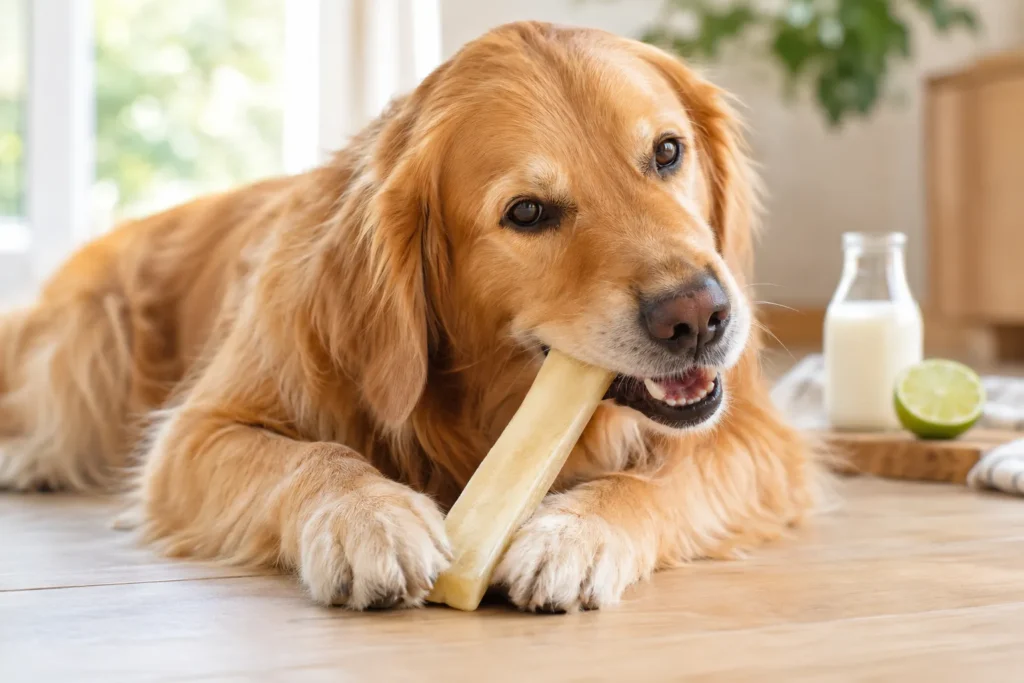
Yaksy yak chews are a long-lasting, rawhide free option for healthy adult dogs that gnaw. Each chew contains yak milk, cow milk, lime juice, and a pinch of salt. It contains no rawhide, no bones, and no artificial binders, colors, or preservatives.
The chews are handmade in Nepal using a traditional Himalayan method: makers curdle the milk with lime juice, press the curd, and dry it until it turns hard. Yaksy states that its chews are ISO 22000 and HACCP certified and that every batch is tested for safety and quality. If you want the background first, read about what a yak cheese dog chew is.
You can choose from six flavors: strawberry, peanut butter, turmeric, mint, blueberry, and apple. The peanut butter yak chew is a good starting point for dogs that need extra motivation. Prices start at $11, and larger sizes reach $32. A 30-day money-back guarantee covers every order, and you can browse all long-lasting yak chews in the shop.
Be honest with yourself about the limits. Yak chews are very hard and fail the thumbnail test, so they are not right for every dog. Skip them or talk to your vet first if your dog is under about 6 months old, has dental disease, or bites straight down on chews. Because they contain dairy, check with your vet if your dog has a known dairy sensitivity. For the full picture, read whether yak chews are safe for dogs.
When a yak chew shrinks to a size your dog could swallow, take it away. Yaksy suggests microwaving the leftover piece for 30 to 60 seconds so it puffs into a crunchy treat. Let it cool completely before you offer it, and supervise your dog.
A Safe-Chewing Checklist
- Measure the muzzle. Pick a chew longer than your dog’s nose-to-jaw-hinge length.
- Start with a short session. Watch whether your dog gnaws at an angle or crunches straight down.
- Stay in the room. Never leave a dog alone with a chew, in a crate, or overnight.
- Remove the last piece. Take the chew away once it fits inside your dog’s closed mouth.
- Count the calories. Treat chews as part of your dog’s daily treat allowance, not as extras.
- Offer fresh water. Keep a bowl nearby during every session.
- Store chews well. The FDA advises keeping pet food and treats in the original container, in a cool, dry place below 80°F.
- Wash your hands. Do this after every handling session.
How to Switch Your Dog From Rawhide
Introduce the new chew gradually. Offer it at the same time and in the same spot where your dog usually gets rawhide. Some dogs need two or three sessions to accept a new texture, so stay patient and keep the first sessions short. Start with a softer chew if your dog has never used a hard one.
When Should You Call Your Vet?
Call your vet right away if your dog shows any of these signs after chewing:
- Choking: pawing at the mouth, repeated gagging or coughing, labored breathing, heavy drooling, or blue-tinged gums. The American Kennel Club lists these in its guide to dog choking. Treat collapse as an emergency.
- Possible blockage: vomiting, loss of appetite, lethargy, belly pain, or straining to pass stool.
- Possible cracked tooth: yelping, dropping the chew, pawing at the mouth, or a chipped or discolored tooth.
If a chew seems contaminated or causes a problem, report it to the manufacturer and to the FDA through its Pet Food Safety Reporting Portal, which accepts reports about treats and chews.
Frequently Asked Questions
Are rawhide free chews good for dogs?
They can be. Most digest more predictably than rawhide, and many avoid the chemical processing vets worry about. Still, hardness, choking, and calories remain concerns. Choose a chew that fits your dog’s size, age, teeth, and chewing style, and supervise every session.
Are rawhide-free bones and chews safe for dogs?
They are safer for many dogs than traditional rawhide, but not risk free. Hard bones can fracture teeth, and small leftover pieces can cause choking. Pick the right size, stay close, and take the chew away once it becomes small enough to swallow whole.
How safe are rawhide free dog chews compared with rawhide?
Rawhide free chews avoid rawhide’s main problems, which are chemical processing and swollen pieces that can block the gut. They bring their own risks, mainly tooth damage from very hard chews. Safety depends on the specific chew and on your dog’s habits.
What are the best rawhide free dog chews for strong chewers?
Strong chewers often do well with firm options such as beef cheek rolls, yak cheese chews, or sturdy rubber toys. Harder chews raise the risk of a cracked tooth, so ask your vet first if your dog crunches down hard.
Are rawhide free dog chews safe for puppies?
Puppies need softer, smaller chews. Very hard chews, including yak chews, are generally not recommended until the adult teeth have come in, usually around 6 months. Your vet can confirm when your puppy is ready.
How long do long lasting rawhide free dog chews last?
It depends on the chew and your dog. Soft chews can disappear in minutes. Yaksy says one yak chew can last a strong chewer a few hours and a gentle chewer several days. Size, chewing style, and supervised session length all matter.
How often can I give my dog a rawhide free chew?
Treat chews as part of your dog’s daily treat allowance. Many owners offer a long-lasting chew a few times a week rather than daily. Ask your vet to set a schedule if your dog is overweight, has a sensitive stomach, or has pancreatitis.
The Bottom Line
The right chew is the one that fits the dog in front of you, not the one with the best label. Before you buy, measure your dog’s muzzle, think honestly about how hard your dog bites, and ask your vet if your dog has dental problems. If you have a healthy adult that gnaws patiently and you want a chew that lasts, shop Yaksy yak chews, and use the 30-day guarantee to see how your dog responds.
This article offers general information and does not replace advice from your veterinarian. Talk to your vet before you introduce any chew to a puppy, a senior dog, or a dog with dental or digestive problems.
Sources
- U.S. Food and Drug Administration, Tips for Safe Handling of Pet Food and Treats
- U.S. Food and Drug Administration, Proper Storage of Pet Food & Treats
- U.S. Food and Drug Administration, Pet Food Safety Reporting Portal FAQ
- FEDIAF, Chews and treats for dogs
- AAFCO, Treats and Chews
- American Kennel Club, Dog Choking: Symptoms and What To Do
- American Kennel Club, How to Choose Edible Dog Chews That Are Also Safe
- Trupanion, Is Rawhide Bad for Dogs?
One Response