
Quick answer: Yak cheese chews are hard, long-lasting dog chews made from yak and cow milk, salt, and lime juice. Many dogs enjoy them, but their hardness can crack teeth, and small leftover pieces can cause choking. Choose a size your dog cannot swallow whole, supervise every session, and ask your vet first if your dog is a puppy, a senior, or has dental problems.
Yak cheese chews, also called Himalayan yak chews or yak dog chews, have become one of the most popular natural chews for dogs in the USA and UK. This guide explains what they are, how they are made, whether they are safe, and how to pick a good one. It also shows you how to turn the last small piece into a safe yak cheese puff.
What Are Yak Cheese Chews?
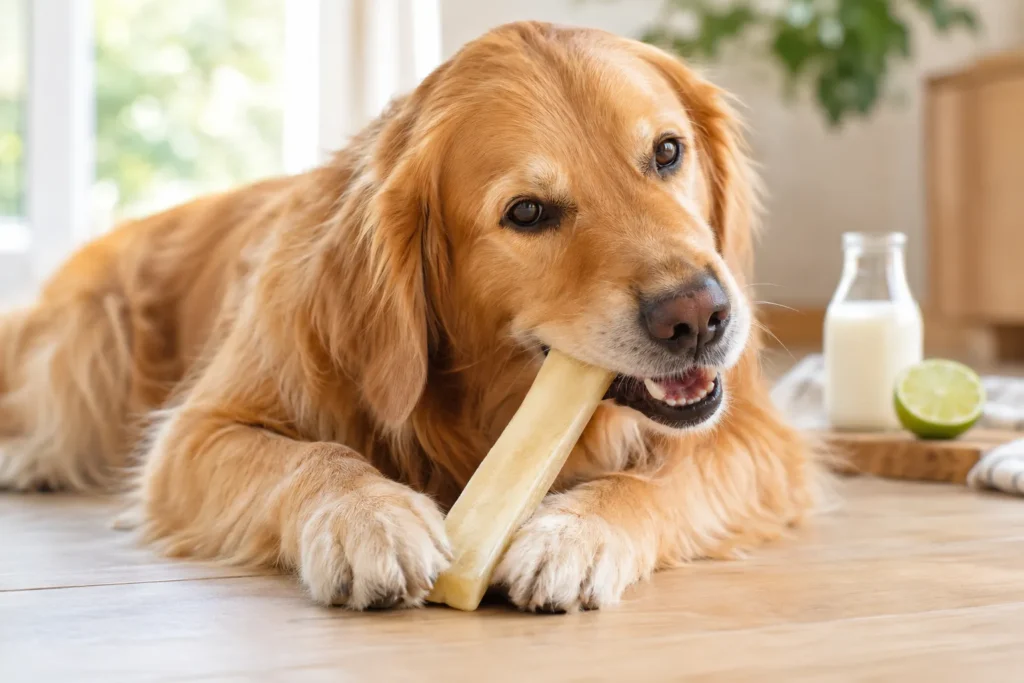
A yak cheese chew is a hard, dried block of cheese. Makers press curd into a mold and air-dry it for several weeks until almost no moisture remains. The result is a dense chew with a mild, smoky smell.
Most genuine yak cheese dog chews use just four ingredients:
- Yak milk
- Cow milk (often blended in)
- Himalayan salt
- Lime juice
The chew comes from chhurpi, a traditional Himalayan cheese. Herding families in Nepal have made it for generations to preserve extra milk without refrigeration. Pet brands later began importing it as a dog chew.
How Are Himalayan Yak Chews Made?
The traditional process has four steps:
- Curdle fresh milk with lime juice.
- Press the curd into a mold.
- Cut the block into sticks or bars.
- Dry the pieces slowly for several weeks.
Drying time and milk quality decide how hard the final chew is. That is why one brand’s chew can feel very different from another’s. For a full walkthrough, read our page on how we make yak dog chews.
Are Yak Cheese Chews Safe for Dogs?
Yes, for many healthy adult dogs, when you choose the right size and supervise every session. The main risks are tooth fractures, choking on small leftover pieces, and stomach upset in dairy-sensitive dogs. Veterinary opinion is mixed, so ask your vet first if your dog has dental problems.
For the full risk breakdown, warning signs, and vet opinions, read our detailed guide: Are Yak Chews Safe for Dogs?. If a product causes a problem, you can report it to the U.S. Food and Drug Administration (FDA).
Are Yak Cheese Chews Good for Dogs?
Yak cheese chews offer real benefits for the right dog:
- Long chewing time. Their hardness keeps heavy chewers busy far longer than soft treats.
- Simple ingredients. Genuine chews contain no artificial flavors or preservatives.
- Mental enrichment. Chewing helps dogs burn energy and relieve boredom.
- Protein. Yak cheese is a protein-rich treat.
- Low odor. Most dogs chew them without leaving a mess or a strong smell.
One claim deserves a caution: dental health. Chewing can help scrape soft plaque, but hardness alone does not guarantee clean teeth. If dental care is your main goal, look for products accepted by the Veterinary Oral Health Council (VOHC) and brush your dog’s teeth regularly.
If your dog chews furniture or baseboards, a long-lasting chew can redirect that habit. See our guide on how to stop dog chewing for a full plan.
Are Yak Cheese Chews Safe for Puppies?
Ask your vet before giving a puppy a yak chew. Hard chews can damage baby teeth, and many sources suggest waiting until adult teeth arrive, around six months. Our yak chew safety guide explains the puppy rules in full.
How Often Can You Give a Yak Cheese Chew?
No official limit exists. Most owners offer one chew a few times a week, count it toward the daily treat allowance (about 10% of calories), and remove it once it gets small. Our safety guide covers a full feeding routine.
What Size Yak Dog Chew Should You Choose?
Size matters more than breed. A chew that is too small is a choking risk.
- Pick a chew your dog cannot fit entirely in their mouth.
- Follow the weight chart on the product label, because sizing differs between brands.
- Move up a size for strong chewers, and ask your vet if you are unsure.
- Check the chew often, and throw away or microwave any piece that becomes small.
How to Choose a Good Yak Cheese Dog Chew
Use this checklist before you buy:
- Ingredients: Look for milk, salt, and lime juice only. Avoid added flavors, fillers, and preservatives.
- Sourcing: Choose brands that explain where the milk comes from and how they dry the chews.
- Appearance: The chew should look clean and dry, with no mold, oily patches, or strong sour smell.
- Hardness: Genuine chews are hard. Be careful with very hard chews if your dog has weak teeth.
- Labeling: The package should list a clear ingredient panel, size guide, and feeding or supervision advice.
- Return policy: A good seller replaces a chew that arrives damaged or the wrong size.
How to Microwave a Yak Cheese Chew (Yak Cheese Puffs)
When the chew shrinks to a small nub, do not let your dog swallow it. Many owners turn the nub into a crunchy puff instead.
- Check the size. Use only the small leftover end, roughly 1 to 2 inches. Never microwave a full-size chew.
- Place it on a microwave-safe plate with room to expand.
- Heat in short bursts. Most guides suggest about 30 to 60 seconds, but microwaves vary, so stay close and watch.
- Wait for the puff. The nub swells and turns light and airy.
- Cool it fully. Let it rest for at least 5 to 10 minutes, because the puff stays hot inside.
- Serve and supervise. Break large puffs into smaller pieces if needed.
If the nub does not puff, throw it away rather than give it to your dog.
Yak Chews vs. Rawhide vs. Bully Sticks
| Feature | Yak cheese chew | Rawhide | Bully stick |
|---|---|---|---|
| Main material | Dried milk cheese | Processed animal hide | Dried beef muscle |
| Hardness | Very hard | Tough, softens when wet | Firm, softens with chewing |
| Typical lifespan | Hours to days | Varies | Shorter for heavy chewers |
| Odor | Low | Moderate | Strong |
| Main risks | Tooth fractures, choking on nubs | Swelling and blockage | Choking on ends, calories |
Read more in our guide to what bully sticks are made of.
Where to Buy Yak Cheese Chews
You can find yak chews at pet stores, online retailers, and specialty natural-treat shops in both the USA and UK. Quality varies, so apply the checklist above, whichever seller you choose. Check ingredient lists and recent customer reviews, and avoid listings that hide the milk source.
Yaksy Dog Chew ships Himalayan yak chews directly to the USA and UK. You can browse sizes in our shop or read our USA and UK buying guide for more detail.
Frequently Asked Questions
Are yak cheese chews safe for dogs?
Yes, for many healthy adult dogs when sized correctly and supervised. They carry risks of tooth fractures and choking, so ask your vet if your dog is a puppy, a senior, or has dental problems. Read the full answer in our yak chew safety guide.
Are yak cheese chews good for dogs?
They can be. They last a long time, use simple ingredients, and give dogs mental stimulation. They are not a replacement for toothbrushing or a balanced diet.
Are yak cheese chews safe for puppies?
Opinions differ. Many sources suggest waiting until adult teeth arrive, around six months. Ask your vet before offering one, and supervise closely.
Can puppies chew on yak cheese?
Some brands allow it from a younger age, but hard chews can damage baby teeth. Your vet can recommend a softer option for teething.
How often can you give a yak cheese chew?
There is no official limit. Most owners offer one a few times a week, keep treats under about 10% of daily calories, and take the chew away once it gets small.
How long does a yak cheese chew last?
Lifespan depends on your dog’s size and chewing style. It can range from a few hours to several days.
What can I do with the last piece of a yak chew?
Microwave the small nub for a short time to make a yak cheese puff. Cool it fully and supervise your dog. Never microwave a full-size chew.
Are yak chews better than rawhide?
Many owners prefer them because they have simple ingredients and do not swell like rawhide. Both carry risks, so supervision matters for either one.
Final Thoughts
Yak cheese chews can be a satisfying, long-lasting treat for the right dog. Choose the correct size, buy from a transparent brand, supervise every session, and retire small pieces early. When in doubt, ask your veterinarian.
This article is for general information and does not replace advice from your veterinarian. Contact your vet if your dog shows signs of illness or injury after chewing.
2 Responses
In my opinion you are not right. Let’s discuss it. Write to me in PM, we will talk.
__________