
Australian Cattle Dog Facts
The Australian Cattle Dog, also called the Blue Heeler, is a strong, compact, highly energetic herding breed developed in Australia from Dingo, Dalmatian, Collie and Kelpie crosses, and recognized by the American Kennel Club in May 1980. It weighs 35–45 lbs on average, lives about 12–13 years, and suits an experienced, active owner who can give it daily exercise, training and socialization.
Living with this breed is a hands-on job, and I learned that the hard way during my first week around one on a working property: the dog watched everything, tested every boundary, and only settled once the routine was clear. That is why an experienced owner gets more from this dog than a hopeful beginner, and why consistent training with positive reinforcement beats shouting every time — you reward good behavior the moment it happens, and you correct bad behavior calmly, in the moment, before it becomes a habit.
Health is the other half of the bargain. This is a tough, athletic dog, but its joints and ligaments take a pounding across a working life, and wear and tear shows up sooner than owners expect. Two problems deserve early attention: canine hip dysplasia, which can stiffen a dog’s back end, and deafness, which changes how you communicate entirely. Both are manageable when caught early, and both are reasons this breed needs an owner who pays attention rather than one who just hopes for the best.
Where Did the Australian Cattle Dog Come From?
The Australian Cattle Dog came from harsh Australian ranch country, bred from Dingo crosses to move cattle where softer dogs failed. Early settlers discovered their imported sheepdogs could not cope with the heat and distance, so the Dingo’s toughness was crossed into the bloodline until a dog emerged that could work all day and still come home wagging. That dog became the Blue Heeler, a great herder and a true farm dog — a herding dog built for cattle herding, not for the show ring.
What strikes me about this breed is how little the job has changed the dog. A modern working dog from these lines still reads a paddock the way its ancestors did, and an active breed like this one treats a quiet afternoon as a problem to solve. Owners who keep one as a devoted companion often say the same thing: the dog is loyal to a fault, shadowing its person from room to room and treating every outing as a shift that has just started.
That working heritage also explains why the breed’s old age looks the way it does. Years of hard stops and sharp turns leave joint problems behind, and owners who skip regular checkups sometimes first notice trouble as hobbling on cold mornings or stiffness after rest. The other quiet thief of old age in this breed is hearing loss, and it creeps in so gradually that many owners mistake it for stubbornness before a vet visit sets the record straight.
What Does an Australian Cattle Dog Look Like?
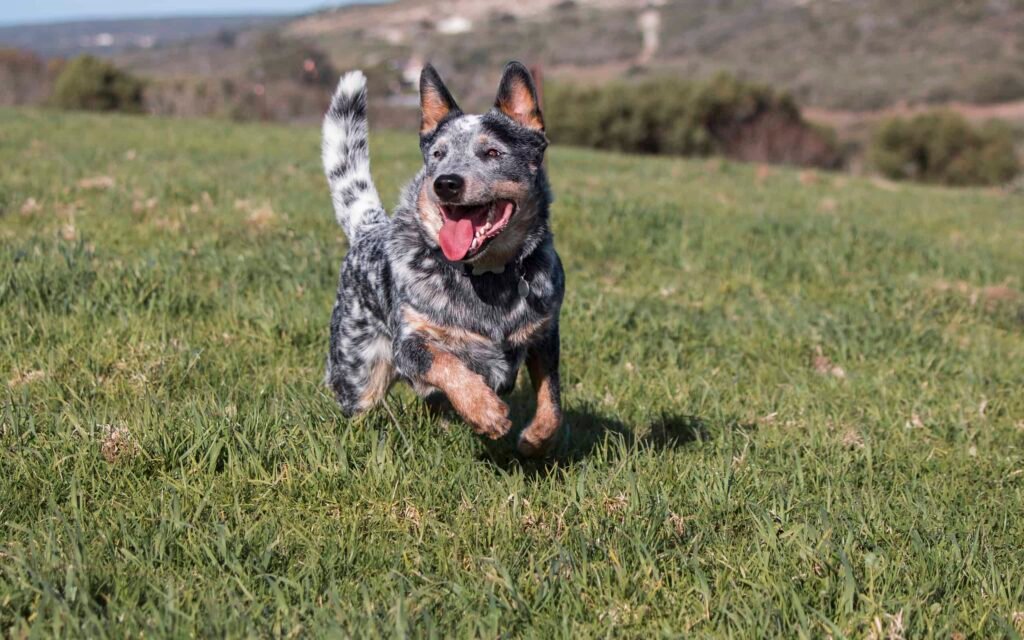
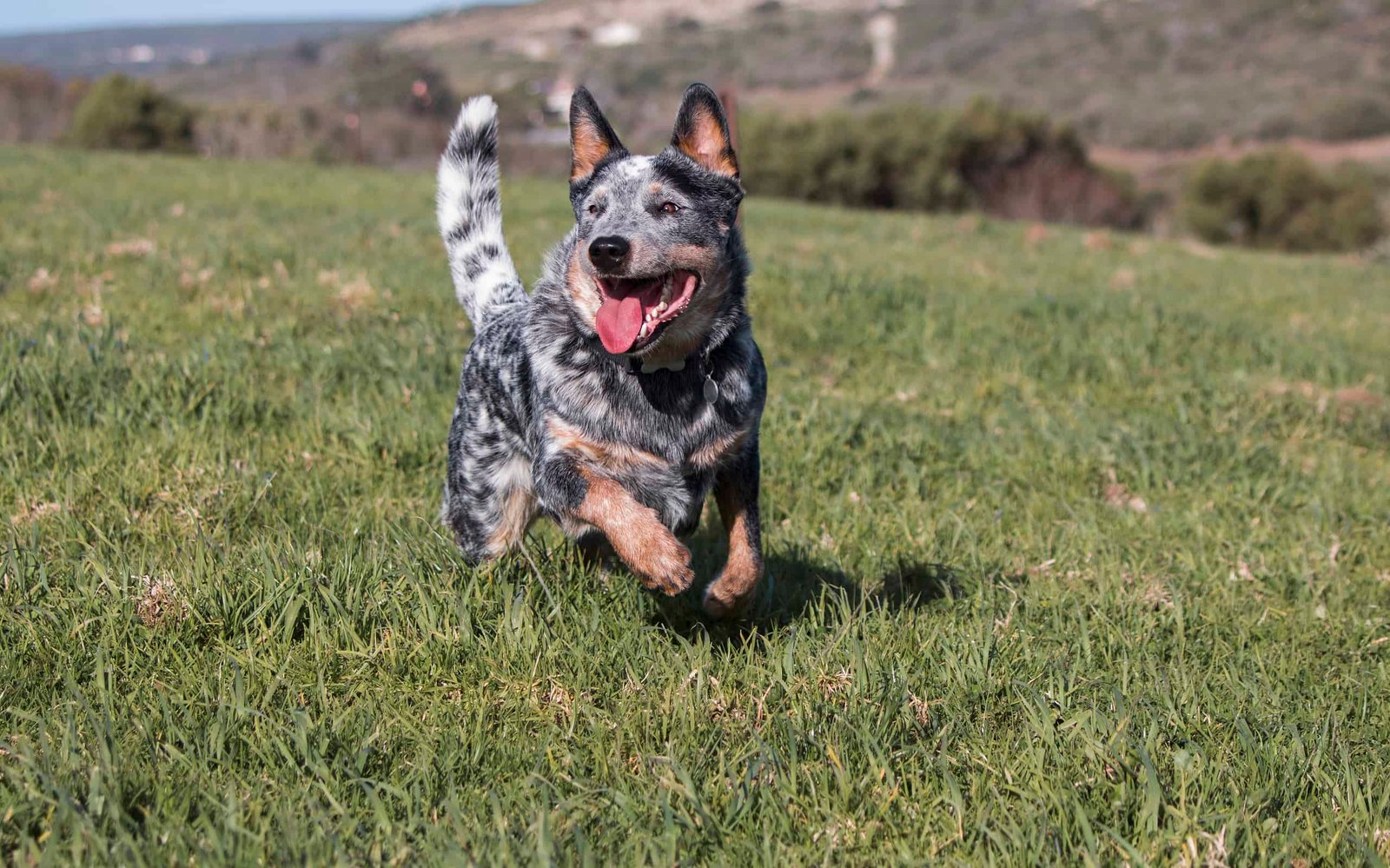
The Australian Cattle Dog is a strong, compact dog with a tight coat marked with speckling in black, brown, blue-grey or black with a bluish hue. Everything about the dog looks ready to work: the body is tight and solid, the ears stay upright and swivel at every sound, and the eyes miss nothing. It is an agile dog with real endurance, the kind of build that can cover rough ground all day without looking tired at the gate.
That look comes straight from the breed’s origin. The crossbreeding that made it started with the native Dingo, and the Dingo’s blood still shows in the coat’s wild speckling and the dog’s desert-tough attitude. The settlers added the Dalmatian, the Collie and the Kelpie after their English Sheepdogs wilted in the hotter temperatures, and each cross left a mark: the Dalmatian’s staying power, the Collie’s brains, the Kelpie’s drive.
No two dogs look quite alike, which is half the charm. Each one carries unique markings — a patch here, a speckle pattern there — and owners swear they can pick their dog out of a mob at a glance. The temperament matches the look: free-spirited and intelligent, tough on the outside and loveable at home, with a high energy charge that never really switches off. One glance tells you this is a unique dog, and living with one confirms it daily.
What Is the Australian Cattle Dog’s Temperament Like?
The Australian Cattle Dog is a determined dog that bonds hard to one person and treats strangers with polite suspicion. It is not a dog that hands out affection to everyone at the park — it chooses its people, and once chosen, it does not let go, and its endurance matches its devotion: it will outwork most owners on a long day. That devotion is the breed’s best trait and, handled badly, its biggest risk, because a dog this attached will invent its own jobs when nobody gives it one.
The dog’s character makes sense once you know its herding history. This is a modern breed shaped by deliberate breed development in the Australian outback, where dogs had to herd cattle across vast distances and think for themselves between commands. The breed was bred to herd — to nip heels, dodge kicks and keep a mob moving — and it was recognized by the American Kennel Club in May 1980, an official stamp on a dog already earning its keep for generations. Life on a ranch built the dog’s brain as much as its body.
You can read that history in the coat. The Blue Heeler name comes from the bluish coat, but the same dog can carry a black coat, a brown coat or a blue-grey coat, and many carry black with bluish hue across the back and head. The compact build is strong without being heavy, and the unique markings — speckles, patches, a blaze — make each dog easy to tell apart in a working mob.
How Do You Train and Socialize an Australian Cattle Dog?
Australian Cattle Dogs train fast with reward-based methods and meeting people and animals early, and they do not respond to punishment at all. A free-spirited dog like this one needs a reason to listen, and a treat, a toy or a game gives it one. I have watched owners lose a whole session by scolding a Heeler, then win the same dog back in two minutes with a pocket full of rewards. A dog this intelligent learns the lesson you actually teach — so teach the one you want.
The dog’s build tells you what training must handle. This is a medium size dog, muscular and sturdy, with a short coat over a dense coat, and a speckled coat — sometimes mottled coat — that hides dust and burrs after a day out. The dog’s pricked ears and alert expression mean it is always reading the room, and that attention is a training gift if you use it before the dog uses it on something else.
That attention comes with a protective streak. The breed is loyal and devoted to its household, tough when something feels wrong and loveable when it relaxes at your feet. Its high energy and endurance are real — this is an agile dog that needs a job — so training should include movement: heel work on a walk, a recall game, a task to complete. A dog that has worked its brain and body in training is a dog that can settle in the house afterwards.
How Much Exercise Does an Australian Cattle Dog Need?
An Australian Cattle Dog needs serious daily work and a job to do, and without both it will invent its own entertainment — usually by destroying something you own. I have never met a tired Heeler that was badly behaved, and I have never met a bored one that was not. This is an energetic, alert and curious dog, hardworking by nature and strong-willed enough to argue about it. It is also independent and confident, which means it will make its own decisions when yours run out — and its decisions usually involve motion.
Every dog is different, and each dog unique in what tires it out: one wants a long run, another wants a herding game, a third wants a problem to solve. Their unique markings make them easy to tell apart, but the differences go deeper: some are wary of strangers and need careful socialization, while others greet the world like an old friend. All of them need lots of training woven into the day, not crammed into a single session.
Without that structure, the classic complaints arrive. The breed needs training around farm animals, children and other pets, because an under-exercised Heeler will start mistakenly herding kids, nipping animals and rough play as a way of burning off steam. Remember that punishing doesn’t work with this breed: you correct behavior the moment it happens, in a way the dog can respond to, and you reward the calm choice that follows. A dog that has worked hard has nothing left to chew except its own toys.
How Do You Groom and Care for an Australian Cattle Dog?
Grooming an Australian Cattle Dog is simple and quick: a weekly brush, a bath when dirty, wiped ears, brushed teeth, monthly nail trims. The coat does most of the work itself: it sheds dirt, dries fast and asks little of you, which suits an active lifestyle and farm work.
Grooming is also training. This breed is very smart and willing to please, and fast learners like these pick up the routine quickly. An experienced owner sets boundaries early — the dog stands still, the owner works — and keeps consistent training with positive reinforcement, so obedience becomes habit instead of debate. What matters too is early socialization to handling: a puppy that accepts hands and clippers grows into an adult that stands quietly — it has learned to respect the routine.
The rest of care is about energy. A highly energetic dog needs exercise every day, and daily exercise keeps it healthy. And chewing is part of the same picture: this breed loves to chew more than normal, so keep tough toys and large bones on hand, and reward good behavior during grooming while you correct bad behavior calmly — the routine gets easier every week.
Grooming routine — five steps, in order:
- Brush the coat — a firm brush lifts dead hair.
- Bathe only when dirty — too many baths strip the coat.
- Wipe the ears — weekly; farm dust collects fast.
- Brush the teeth — a few times a week.
- Trim the nails — monthly trims keep feet sound.
What Health Problems Do Australian Cattle Dogs Have?
The Australian Cattle Dog’s main health problems are hip dysplasia and deafness, plus the joint wear that comes from a lifetime of hard work. This is not a fragile breed, but it spends its body. Years of running, turning and stopping put miles on the joints, and the drive that makes the dog great at its job is what wears it down.
Prevention starts with how the dog lives: mental stimulation matters as much as miles. A dog with no job and no puzzle slides into boredom, and boredom turns into destructive behavior fast. But long walks and playtime help, though this breed also needs work that uses its herding instinct and its stamina. Give that working drive an outlet for energy daily, and the body holds up far longer than on a couch.
The daily grooming routine doubles as a health check: bathing lets you feel for lumps and sore spots, ear cleaning shows up infections before they take hold, and toothbrushing keeps mouth pain from hiding. With nails trimmed monthly the feet track straight, coat brushing through the shedding season clears loose hair, and if you brush regularly — heaviest with the shedding in spring — then finish with clean ears weekly to spot most problems while they are small.
Condition | Signs | What to Do |
|---|---|---|
Hip dysplasia | Stiff back end, slow on stairs, less active | Vet check, weight control, surgery in severe cases |
Deafness | No response to sound, odd barking, startling easily | Hearing check, hand signals, retire from work |
How Big Do Australian Cattle Dogs Get and How Long Do They Live?
An Australian Cattle Dog weighs 35–45 lbs on average and lives about 12–13 years, with a puppy stage of just one year before it starts acting like a teenager. That single puppy year goes fast — one day you have a clumsy pup, the next a leggy adolescent testing every rule — so the training and socialization done in that first year carries the dog for the next twelve.
Keeping that weight healthy is mostly routine. A healthy coat on this breed comes from hygiene done little and often: dental care a few times a week, nail care once a month, short coat care that is mostly a good brush, and routine care that never gets skipped. The coat is a low maintenance coat — a quick brush lifts the dead hair, and the brushing frequency only needs to rise during seasonal shedding, when the undercoat lets go in handfuls.
Age is where the breed’s working life sends its bill. The joints and ligaments carry years of hard stops, and wear and tear shows up as hobbling on cold mornings, less activity on long days and stiffness after rest, which is why regular checkups catch the real problems early — canine hip dysplasia, which means deformed hip joints, usually appears in later life, and surgery may be needed when the dog can no longer move comfortably, and deafness is the other slow change of old age: a dog that cannot hear you needs hand signals and patience, not louder shouting.
Is the Australian Cattle Dog Right for You?
The Australian Cattle Dog is right for an experienced, active owner with time for daily work and training — and wrong for anyone wanting a quiet, low-effort pet. This is the honest fork in the road, and most of the breed’s problems start when someone picks the wrong side of it. The dog will not slow down to match a quiet house; the house has to speed up to match the dog.
The practical numbers help the decision: average weight runs 35–45 lbs — a 35 lbs dog is on the light end, a 45 lbs dog is solid muscle — and the lifespan runs 12–13 years, about 12 years at the short end and about 13 years for the fortunate ones. That is a dozen years of daily commitment, starting with puppies for 1 year and a 1-year-old that already acts like a teenager.
The long view matters too, because this breed ages like an athlete. An aging dog can develop joint problems and mobility issues, and hearing loss sometimes arrives as nonresponsive to sound, unusual barking and jumpiness that owners mistake for bad temper. Plan for vet visits and health screening as the dog ages, and for the day a working dog must retire from farm duty and take extra care at home. A chronic condition in this breed is rarely a crisis when caught early — it is a management job, and it belongs in the decision you make today.
What the Competitors Did Not Cover
The sources skip the details that decide whether this breed thrives or struggles at home. This is a medium-sized breed with fast growth stages: a short puppy stage, a teenage stage where the dog tests everything, then an adult dog. The young dog is comparable to a teenager in behaviour and size.
The numbers nobody quotes: life expectancy is roughly a dozen years, the size range runs from the mid-thirties to the mid-forties in pounds, and a healthy weight is one you can feel in the ribs without seeing them — and development does not stop at a year old: the brain keeps maturing, and the chaos of fourteen months can be a steady partner at three. The right breed fits your life for the whole life expectancy, not just the cute puppy in front of you.
Most owners get daily life wrong, and the fixes are boring. The right diet and regular checkups matter more than any supplement, and a high energy dog with real endurance needs real work. This loyal, agile dog wants a job, and it needs an experienced owner who gives it one.
Common mistakes new owners make:
- Too little exercise — a tired Heeler is a good Heeler; a bored one remodels your house.
- No socialization — a dog that never meets strangers treats them as threats.
- Shouting instead of training — shouting teaches fear, not listening.
- Expecting an adult too soon — the teenage months are real; patience beats frustration.
Frequently Asked Questions (FAQs)
How Long Do Australian Cattle Dogs Live?
Australian Cattle Dogs live about 12–13 years. That long life is a gift with a price tag attached: the time commitment runs a dozen years, and the dog needs an active owner through all of them. The first thing to budget is daily exercise needs — there is no single exact exercise time that fits every dog, but most need a serious daily workout plus work for the brain, and mental stimulation matters as much as miles: training games and puzzle toys keep the dog busy, and without them boredom behaviours appear fast — including chewing from boredom. The training needs do not end at a year old, and neither does the daily exercise. This is not a first-time owner dog, and farm life suits it better than apartment living, though a committed owner in a flat can make it work with enough outings. The grooming routine in detail is the easy part — a brush, a bath when dirty, wiped ears and trimmed nails.
How Much Do Australian Cattle Dogs Weigh?
Australian Cattle Dogs weigh 35–45 lbs on average. The number on the scale is only half the story — the decision to bring one home is really a lifestyle match question. This is a working home dog at heart, happiest in a rural home with land and a job, and its suitability as a family dog depends on the family’s energy, not its size. The long-term commitment runs a full lifespan of 12–13 years — about 12 years on the short side, about 13 years for the fortunate — so responsible ownership means planning for a dozen years of food, vet care and work. The coat asks little: weekly brushing is enough, a simple bathing schedule of only-when-dirty, an ear cleaning routine once a week, and a nail trimming schedule once a month. For training methods that work, remember that punishment fails with this breed and reward-based training wins — and before you decide, weigh apartment suitability honestly, because a dog this busy in a small flat needs an owner with serious time — life expectancy is long, and so is the commitment.
Are Australian Cattle Dogs Good With Children?
Yes, Australian Cattle Dogs can be good with children — with early introductions, training and supervision. This is a long-lived breed with a healthy lifestyle behind it, and a well-raised Heeler is a devoted family member. But two of the most common mistakes — and classic new owner mistakes — are under-exercising the dog and skipping socialization, and both show up fastest around children, where a bored dog may herd and nip. Be blunt with yourself: this breed is not for beginners, and first-time owners often underestimate the work. The average weight is 35–45 lbs — a 35 lbs dog is light, a 45 lbs dog is a solid medium-sized breed — so a herding nip from this dog is not a small thing. Keep regular checkups through the dog’s life, and plan for senior care too: aging joints need a senior diet and gentler days, and an aging dog that hurts is a dog that snaps faster. Senior care is part of the same promise you make on the day you bring the puppy home.
Do Australian Cattle Dogs Shed a Lot?
Australian Cattle Dogs shed moderately most of the year and heavily in spring, when the undercoat comes out in handfuls. The coat is short and practical, and a strong, compact build that is muscular and sturdy does not change the shedding — expect hair on the floor and a brush in your hand. A healthy weight keeps the coat in good condition, but no diet stops the spring shed. Shedding and behaviour are separate jobs, and the behaviour job matters more: children should be part of the dog’s socialization from the start, with early socialization: introduce to children gently, on the dog’s terms, and show the dog the difference between a playmate and livestock. A dog that never learns this may end up mistakenly herding kids around the garden, which is funny once and a problem after that.
Why Are Australian Cattle Dogs Called Blue Heelers?
Australian Cattle Dogs are called Blue Heelers because of their bluish coat — and because they herd by nipping at heels. The name is two facts in one: the blue-grey, mottled coat and the heel-nipping style of herding. That nipping is not aggression, but it is why training and supervision matter, especially with a family dog that lives with children — herding behaviour belongs in the paddock, not the living room, and rough play should be stopped before it becomes a habit. The coat side of the name is easier to live with: shedding is moderate, coat brushing once a week handles most of it, the heavy shedding in spring is the worst of it, and the shedding season and seasonal shedding both pass in a few weeks with a good brush.
Are Australian Cattle Dogs Easy to Train?
Yes — Australian Cattle Dogs are among the easiest breeds to train, because they are smart, willing to please and fast learners. This is the easy part of owning the breed, and owners say so in almost the same words every time. The Blue Heeler learns a new cue in a handful of repetitions, and the heeler brain wants the next task the moment the last one is done. Training works best in short, sharp sessions with rewards — long, boring drills lose this dog fast. The coat is the same story: a short coat that sheds dead hair and asks for a quick brush regularly habit, a simple grooming routine and a low maintenance coat that looks after itself. The bluish coat — sometimes a blue-grey coat, sometimes black with bluish hue — is the breed’s signature, and it takes less work than the brain underneath it.
What Health Problems Do Australian Cattle Dogs Have?
The main health problems in Australian Cattle Dogs are hip dysplasia and deafness, plus joint wear from a lifetime of hard work. The Australian Cattle Dog earns its nickname honestly: the dog was built for herding, and cattle herding across rough country is what shaped its body — and what eventually wears it out. The coat colour tells you nothing about health, so do not read anything into blue versus red. What protects the dog is training that is smart and kind: these dogs are very smart and fast learners, willing to please when the method respects them, and punishing doesn’t work — it only teaches a clever dog to hide its behaviour. Keep the vet visits regular, watch the hips and the hearing as the dog ages, and a breed built for hard work will usually give you a long, sound life.