

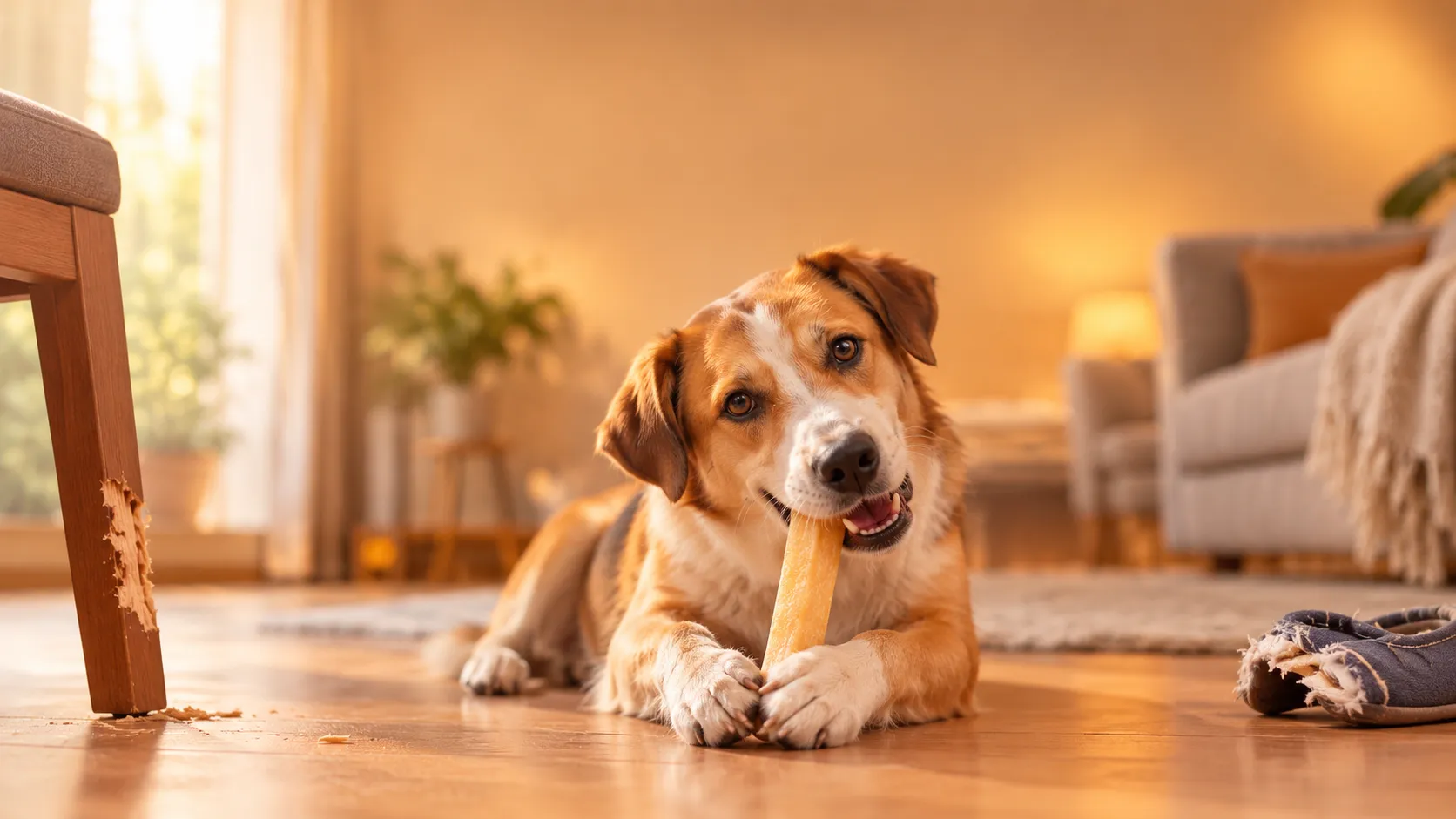
If you have come home to a chewed up shoe, a missing corner of the couch, or a baseboard that looks like it lost a fight, you already know how frustrating dog chewing can be. The good news is that this is one of the most common and most fixable behaviors in dogs. Almost every case of destructive chewing can be managed once you understand why it is happening and what your dog actually needs instead.
This guide covers how to stop a dog from chewing everything, whether you are dealing with a teething puppy or an adult dog who has picked up a habit of chewing the wrong things, including the real reasons behind chewing, age specific strategies, practical solutions, the safest chew alternatives, common mistakes, and when it is time to bring in a vet or trainer.
Why Dogs Chew
Before you can stop unwanted chewing, it helps to understand that chewing itself is not the problem. It is a normal, healthy behavior. According to the ASPCA, chewing helps puppies cope with the discomfort of incoming teeth, keeps adult dogs’ jaws strong and their teeth clean, and can relieve boredom or mild anxiety. Your dog is not chewing your shoe out of spite. They are doing something dogs are built to do, and the item they chose just happened to be available and interesting.
As the team at Cobb Veterinary Clinic points out, understanding the root cause is the real first step, since a dog who chews out of boredom needs a very different response than a dog who chews because they are anxious about being left alone. Broadly, the reasons dogs chew fall into a few categories.
Teething. Puppies lose their baby teeth and grow in adult teeth over several months, and the process is uncomfortable. Chewing on something firm provides relief, similar to how a human baby gnaws on a teething ring.
Boredom and lack of exercise. A dog who does not get enough physical activity or mental stimulation will often look for their own entertainment, and chewing is always available.
Anxiety and stress. Dogs who struggle with being left alone, or who are naturally more nervous, can chew as a way to release tension. This often happens specifically around doors, windows, or exit points.
Curiosity and exploration. Dogs experience much of the world through their mouths. A new object, a strange smell, or something that carries your scent can be irresistible simply because your dog wants to investigate it.
Attention seeking. Some dogs learn that chewing the remote control gets an instant reaction from their owner, even a scolding, and any attention can reinforce the behavior if it beats being ignored.
Underlying health issues. Less commonly, excessive chewing can be linked to nutritional deficiencies, gastrointestinal discomfort, dental pain, or a compulsive condition called pica, where a dog eats non food items. If chewing appears suddenly with no clear trigger, it is worth ruling out a medical cause.
How to Stop Puppy Chewing
Puppy chewing deserves its own approach because so much of it is tied to a normal developmental stage rather than a behavior problem that needs correcting in the traditional sense.
Puppies typically begin losing their baby teeth around three to four months of age, and the adult teeth are usually fully in by around six to eight months. During this window, expect chewing to be intense. As the team at Tribeca Vets explains, this is a completely normal part of puppy development, and the goal during this stage is not to eliminate chewing but to direct it toward the right objects.
Here is what actually helps during the puppy stage.
Puppy proof your space. Get down to your puppy’s eye level and look around the room. Anything within reach that you are not willing to lose should be picked up, put away, or blocked off, from shoes to cords to low shelves.
Offer a variety of textures. Puppies often have preferences, some like soft rubber, others prefer something firmer. Keep two or three chew toys available and rotate them every few days.
Use cold to soothe sore gums. A clean, damp washcloth twisted and frozen, or a specially designed puppy teething toy that can be chilled, can provide real relief during the most uncomfortable weeks of teething.
Supervise constantly. During the puppy stage, your dog should either be in your direct line of sight or safely confined. This is not about punishment, it is about preventing your puppy from practicing a habit you do not want to become permanent.
Redirect, do not scold. If you catch your puppy chewing something they should not, calmly remove the item and immediately replace it with an approved chew, then praise them for taking it. This teaches the lesson far more effectively than yelling ever will, mainly because puppies cannot connect a scolding to something they did even a minute earlier.
Keep sessions positive. Puppies who are taught that chew toys are fun and rewarding, rather than dealing with constant correction, tend to develop better long term chewing habits as adults.
How to Stop Adult Dog Chewing
If your dog is well past the puppy stage and still chewing destructively, the underlying cause is usually one of the categories mentioned earlier, most often boredom, anxiety, or a habit that was never fully corrected as a puppy.
According to the American Kennel Club, adult dogs who were never taught what was and was not appropriate to chew as puppies often continue experimenting with their teeth well into adulthood, simply because nothing ever taught them otherwise. The encouraging part of this is that it is rarely too late to retrain the behavior, it just takes more consistency than it would have with a puppy.
Start by identifying the pattern. Chewing only when left alone points toward boredom or anxiety. Chewing concentrated around exits, doors, or windows is a strong sign of separation related stress. Chewing that happens constantly regardless of whether you are home may point toward a more generalized lack of stimulation, or in some cases, an underlying health issue worth discussing with your vet.
For dogs who chew mainly when left alone, Petfinder’s guidance on chewing when home alone recommends a gradual approach. Confine your dog to a safe, chew proofed space with an appealing chew item, and build up the amount of time they spend there unsupervised in small increments, rather than expecting them to go from constant supervision to an eight hour workday overnight. If you come home and find any damage, it is a signal to shorten the alone time again before slowly building back up.
For dogs who seem to chew more out of general excess energy or restlessness, increasing daily exercise and adding structured play sessions before you leave the house often makes a noticeable difference within a couple of weeks.
Practical Solutions
These are the day to day strategies that make the biggest difference, regardless of your dog’s age or the reason behind their chewing.
Manage the environment first. This is the single most effective and most overlooked step. As the Wisconsin Humane Society puts it in their guidance on preventing unwanted chewing, the goal is not to stop your dog from chewing altogether, it is to redirect that natural behavior toward items that are safe and appropriate. Keep valuable or dangerous items out of reach, use baby gates to limit access to certain rooms, and close doors when you cannot supervise.
Play the trade game instead of pulling items away. If your dog picks up something they should not have, resist the urge to grab it out of their mouth. Snatching an item can turn chewing into a chase game or, in more sensitive dogs, create resource guarding behavior. Instead, offer something more appealing, like a favorite treat or toy, and let your dog choose to drop the item and take the trade.
Build a daily exercise and enrichment routine. A tired, mentally satisfied dog chews far less than a bored one. A brisk walk, a short training session, a snuffle mat, or a puzzle feeder can meaningfully reduce a dog’s drive to entertain themselves with your furniture.
Use deterrent sprays on fixed objects. For things you cannot move, like furniture legs or baseboards, a bitter tasting, pet safe spray can help break the habit. These need to be reapplied daily for a few weeks, and should never be sprayed directly into your dog’s mouth.
Address bed and furniture chewing specifically. If your dog has taken a particular liking to chewing their bed or the corner of the sofa, it is often a sign of either separation anxiety or simple boredom during downtime. As the guidance from Bronteglen suggests, providing a durable, chew resistant bed alongside an appropriate chew toy nearby can redirect the behavior while you work on the underlying cause.
Rotate chew toys and treats. Dogs, like people, can get bored of the same options. Keeping two or three chews or toys in circulation and switching them out every few days keeps things interesting and reduces the appeal of finding something new on their own, like your slipper.
Consider a stuffed, freezable toy for alone time. A rubber toy stuffed with a small amount of food and frozen can occupy a dog for a long stretch and turn alone time into something they actually look forward to, rather than something stressful.
Best Safe Alternatives
Giving your dog the right things to chew on is just as important as managing their environment. A dog with no appealing legal outlet for chewing will always find an illegal one eventually.
Here is a comparison of common chew options, including where a natural option like a yak chew fits in.
| Chew Type | Durability | Digestibility | Best For | Things to Watch For |
|---|---|---|---|---|
| Yak cheese chews | Long lasting, very hard | Softens gradually, digests well | Adult dogs, moderate to heavy chewers | Remove once worn to a small piece to avoid choking |
| Rubber puzzle toys (like a Kong) | Very durable, reusable | Not edible | Puppies and adults, alone time | Choose the correct size and firmness for your dog |
| Bully sticks | Softens quickly | Fully digestible | Dogs who finish chews fast | Shorter lifespan, supervise closely |
| Rawhide | Medium durability | Poor, can swell | Occasional supervised chewing | Higher risk of blockage if swallowed in large pieces |
| Nylon or hard plastic bones | Very durable | Not edible | Heavy chewers who need something tough | Very hard, some dogs can chip a tooth |
| Soft plush toys | Low durability | Not edible, stuffing hazard | Gentle chewers, comfort item | Not suitable for dogs who tear and swallow stuffing |
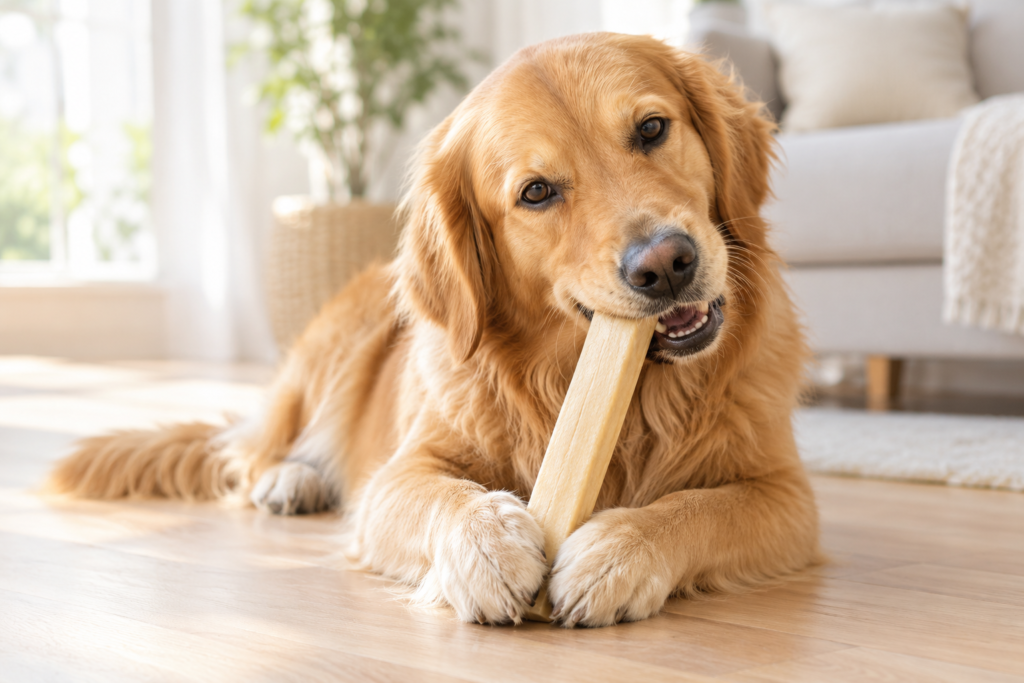
Among edible options, a well sized yak chew tends to stand out for owners who want something natural, long lasting, and free from the additives found in some processed chews. As the guidance from Earthbath on managing chewing behavior notes, giving dogs an outlet that genuinely holds their attention for a long stretch is one of the most reliable ways to reduce interest in furniture and household items.
If you are looking for that kind of long lasting, natural option, Yaksy Dog Chews offers Himalayan yak cheese chews sized by breed and weight, so you can match the chew to your dog rather than guessing.
As with any hard chew, always size it appropriately, supervise the session, and remove it once it wears down small enough to fit entirely in your dog’s mouth.
What Not to Do
Some common reactions to destructive chewing can actually make the problem worse or damage trust with your dog. The ASPCA is direct about several of these, and they are worth repeating clearly.
Do not punish after the fact. If you come home to a chewed cushion and your dog was alone for hours, scolding them now teaches nothing. Dogs cannot connect a punishment to something they did minutes or hours earlier, and it can make them anxious about your arrival home instead.
Do not use physical restraints or old fashioned tricks. Taping a dog’s mouth shut, tying a chewed item to their collar, or using a muzzle to prevent chewing are outdated, inhumane methods that teach nothing and can cause real physical harm.
Do not leave a dog crated for excessively long periods as a chewing fix. A crate used correctly, for short periods with an appropriate chew inside, is a helpful tool. Confining a dog for six or more hours at a stretch on a regular basis just delays the problem.
Do not give old household items as chew toys. Dogs cannot tell an old shoe from a new one, so only offer items made specifically as dog chews or toys.
Do not ignore a sudden change in chewing behavior. If a dog who has never chewed destructively suddenly starts, or if chewing is paired with other symptoms like vomiting, changes in appetite, or lethargy, treat it as a signal to check in with your vet rather than a training issue to push through alone.
When to Get Help
Most chewing problems improve significantly within a few weeks of consistent management, exercise, and the right chew options. However, there are situations where it makes sense to bring in outside help.
According to VCA Animal Hospitals, destructive chewing that does not respond to basic management, especially when it is tied to anxiety, confinement stress, or a dog seems unable to settle even with plenty of exercise, often benefits from a more structured behavior plan rather than trial and error at home.
Consider reaching out to a professional if any of the following apply. Your dog’s chewing is concentrated around doors, windows, or exits, along with drooling, pacing, or vocalizing when left alone, which can point to separation anxiety needing a dedicated plan. The chewing seems compulsive, meaning your dog struggles to stop even when redirected, or it is paired with eating non food items like fabric or dirt, which can be a sign of pica. You have tried consistent management and appropriate chews for several weeks with no improvement. Or your dog shows signs of pain, changes in appetite, or vomiting alongside the chewing, which could point to a dental issue or another medical cause.
A veterinarian can rule out physical causes and, if needed, refer you to a certified applied animal behaviorist or a certified professional dog trainer. This is not a sign that you have failed as an owner, some chewing issues genuinely need a more tailored plan than general advice can offer.
Frequently Asked Questions
How to stop dog chewing?
Identify why your dog is chewing, whether that is teething, boredom, anxiety, or an uncorrected habit. Manage the environment so tempting items are out of reach, provide chews that genuinely hold their interest, and keep up daily exercise. Consistency matters more than any single trick.
How to stop a dog from chewing everything?
Remove access to items you do not want chewed, offer a rotating variety of appealing approved chews, and make sure your dog gets enough physical and mental exercise every day. A dog who is worn out and has satisfying outlets rarely has the motivation to chew everything in sight.
How do you get dogs to stop chewing on things?
Redirect rather than punish. When you catch your dog chewing something inappropriate, calmly trade it for an approved chew and praise them for taking it. This teaches your dog what is okay to chew far more effectively than scolding after the fact.
How to stop a dog from chewing on things when left alone?
Build up alone time gradually rather than leaving for a full day right away. Provide a long lasting chew or a stuffed puzzle toy reserved for alone time, and consider crate training if your dog finds a confined space calming.
Do puppies grow out of destructive chewing?
Most puppies significantly reduce destructive chewing once teething ends, around eight months of age. If a puppy is never taught which items are appropriate, though, the habit can continue into adulthood.
Can the wrong diet cause a dog to chew more?
In rare cases, yes. A dog who is not getting adequate nutrition may chew or eat unusual items looking for missing nutrients. If chewing seems tied to hunger, it is worth discussing your dog’s diet with your veterinarian.
Conclusion
Destructive chewing is frustrating, but it is almost always solvable once you understand what is driving it. Puppies need patient redirection through a temporary but intense teething stage. Adult dogs usually need a combination of better environmental management, more exercise, and the right chews to satisfy a completely natural instinct. What almost never works is punishment after the fact or outdated restraint methods, and what almost always helps is consistency paired with genuinely appealing alternatives.
Giving your dog a chew that actually holds their attention, like a properly sized yak chew from Yaksy Dog Chews, removes a lot of the daily battle simply by making the right choice the most interesting one available. Combined with the management and training steps in this guide, most owners see real improvement within a few weeks.
This article is intended for general informational purposes and is not a substitute for individualized veterinary or professional behavioral advice. If your dog’s chewing is sudden, severe, tied to signs of pain or illness, or paired with eating non food items, please consult your veterinarian. For chewing linked to separation anxiety or compulsive behavior that does not improve with consistent management, consider working with a certified professional trainer or veterinary behaviorist.
Sources and References
- https://www.aspca.org/pet-care/dog-care/common-dog-behavior-issues/destructive-chewing
- https://www.cobb.vet/destructive-chewing-in-dogs-why-it-happens-and-how-to-stop-it/
- https://www.wihumane.org/resource/preventing-unwanted-chewing/
- https://www.tribecavets.com/blog/destructive-chewing-by-dogs-and-puppies
- https://www.goodrx.com/pet-health/dog/how-to-stop-dog-from-chewing-everything
- https://earthbath.com/blogs/earthbath-blog/how-to-stop-dog-chewing
- https://www.akc.org/expert-advice/training/why-does-my-dog-chew-my-furniture-and-baseboards/
- https://www.bronteglen.co.uk/blog/how-to-stop-your-dog-from-chewing-bed/
- https://www.petfinder.com/dogs-and-puppies/behavior/chewing/dog-chews-left-alone/
- https://vcahospitals.com/know-your-pet/dogs-and-destructive-chewing

One Response